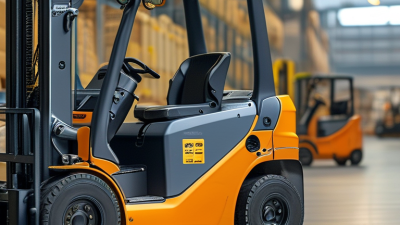

How to Choose a Motorized Forklift in 2026?
Choosing a Motorized Forklift in 2026 requires more than comparing lifting capacity and purchase prices. Warehouse conditions are changing quickly. Electric power, lithium-ion batteries, automation, and telematics now influence long-term operating costs. The World Industrial Truck Statistics report shows sustained global demand for industrial trucks, although regional growth remains uneven. Its data suggests that market volume alone cannot determine the right machine.
Safety must remain central. The U.S. Occupational Safety and Health Administration reports approximately 85 annual forklift-related fatalities and 34,900 serious injuries. These figures make visibility, stability, operator training, and maintenance essential buying criteria. Combilift CEO Martin McVicar has stated, “The forklift is the workhorse of the warehouse, but it can also be a dangerous machine if not used correctly.” That warning still matters in highly automated facilities.
A practical selection process should examine aisle width, floor quality, load shape, lift height, shift length, charging access, and local service support. A three-ton truck may appear powerful, yet it could waste energy in narrow aisles. A compact electric model may fit beautifully, but battery downtime can disrupt a busy second shift. MHI’s Annual Industry Report continues to identify labor pressure and technology adoption as major supply-chain concerns. Still, no report can measure every uneven floor or rushed operator. That is the uncomfortable part. Buyers should test real loads, calculate total cost of ownership, and question supplier assumptions before signing. The best Motorized Forklift is not always the newest model. It is the safest, most serviceable machine for the work actually performed.
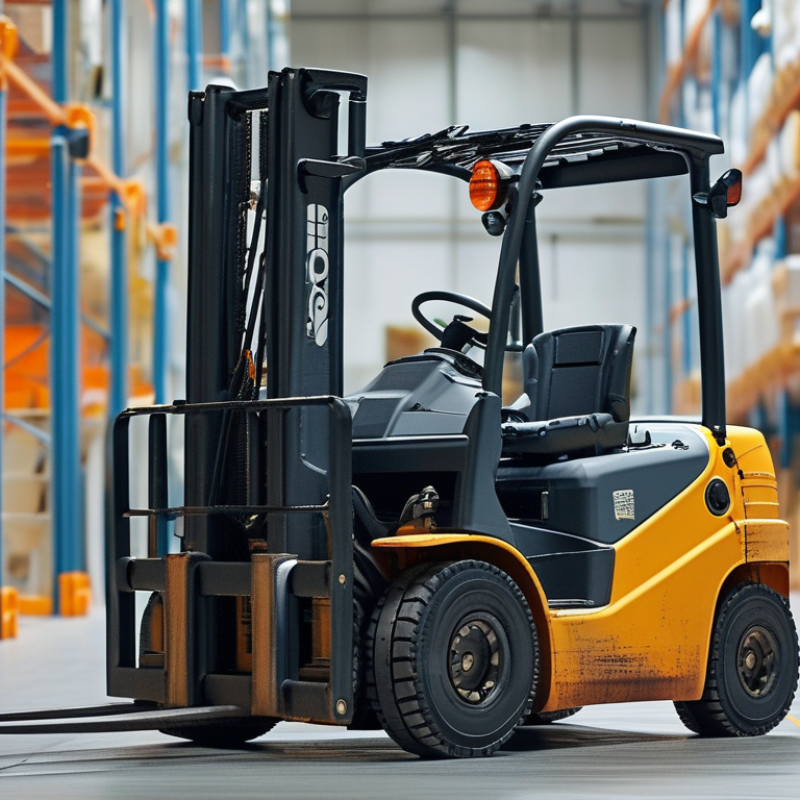
Set Load, Lift-Height, and Duty Targets Against ANSI/ITSDF B56.1 Ratings
Choosing a motorized forklift in 2026 starts with three measurable targets: load weight, lift height, and duty cycle. Do not choose by the maximum capacity printed in a brochure. That figure may apply only to a specific load center, mast, and configuration.
During a warehouse assessment, record the heaviest pallet, its dimensions, and the highest storage location. Then compare those figures with the forklift data plate and the applicable ANSI/ITSDF B56.1 requirements. Capacity usually changes as the load center moves forward or the mast rises. Attachments, uneven floors, and battery weight can also reduce practical capacity. That gap matters.
Duty targets need equal attention. Count operating hours per shift, travel distance, ramp use, starts per hour, and charging opportunities. A forklift handling dense pallets for eight hours needs different thermal and braking performance than one making occasional indoor moves. Check rated capacity at the intended lift height, not at floor level. Ask for load charts, stability information, and maintenance records from qualified suppliers.
Be cautious with neat assumptions. My early estimates have been too optimistic when pallet weight varied by product moisture and packaging. Build a safety margin, but do not invent one without engineering support. Operators should receive training suited to the selected truck, workplace hazards, and operating conditions. Recheck the data after adding an attachment or changing rack heights.
How to Choose a Motorized Forklift in 2026?
Set load, lift-height, and duty targets against ANSI/ITSDF B56.1 ratings.
The chart compares representative forklift capacity targets at a 24-inch load center with an 80% planning-load limit. These values are screening targets, not fixed ANSI/ITSDF B56.1 capacity classes. Always confirm the data plate, load center, attachment effects, residual capacity, lift height, and operating conditions before selecting equipment.
Match Forklift Classes to 3,000–36,000 lb Capacity and Aisle Needs
How to Choose a Motorized Forklift in 2026?
Choosing a forklift starts with the load, not the advertised maximum capacity. For 3,000–5,000 pounds, Class I electric or Class IV cushion-tire trucks often suit warehouses and smooth floors. Class V pneumatic-tire trucks can handle heavier loads, outdoor yards, and uneven surfaces. For 16,000–36,000 pounds, heavy-duty Class V or Class VII equipment may be appropriate. Check the capacity plate carefully. A 36,000-pound rating can fall sharply when the load center increases from 24 to 36 inches.
Aisle space changes the decision. Standard counterbalance trucks commonly need about 12 feet of turning room. Reach trucks may operate in roughly 8–10-foot aisles, depending on rack height and pallet size. Very narrow aisle equipment can reduce space further, but it demands accurate floors, trained operators, and disciplined traffic control. Measure the tightest turn, not the average aisle. Small errors become expensive.
OSHA reports approximately 85 annual forklift fatalities and 34,900 serious injuries in the United States. Its powered industrial truck standard, 29 CFR 1910.178, requires training and workplace controls. Those figures make visibility, stability, and stopping distance practical selection criteria, not paperwork. I would test the proposed truck with the actual attachment and heaviest pallet. A neat capacity table can mislead. Even experienced teams sometimes overlook battery weight, dock slopes, or clearance above racks. That assumption deserves testing. (Source: OSHA, Powered Industrial Trucks; Industrial Truck Association classification guidance.)
How to Choose a Motorized Forklift in 2026? - Match Forklift Classes to 3,000–36,000 lb Capacity and Aisle Needs
| Forklift Class | Typical Configuration | Practical Rated Capacity Range | Typical Power Source | Recommended Operating Aisle | Best-Fit Operating Environment | Key Selection Considerations |
|---|---|---|---|---|---|---|
| Class I | Electric counterbalanced forklift with cushion or pneumatic tires | 3,000–8,000 lb | Battery-electric | 11–13 ft | Indoor warehouses, food and beverage facilities, manufacturing plants, and loading docks where low emissions and low noise are important | Check battery runtime, charging space, floor condition, ramp performance, mast height, and whether the required capacity is maintained at the specified load center |
| Class II | Reach truck or narrow-aisle electric forklift | 3,000–4,500 lb | Battery-electric | 8–10 ft | High-density pallet storage, distribution centers, and warehouses using selective or double-deep racking | Prioritize lift height, residual capacity at maximum elevation, reach mechanism, rack clearance, turning radius, and floor flatness |
| Class I | Electric three-wheel counterbalanced forklift | 3,000–5,000 lb | Battery-electric | 10–12 ft | Indoor applications requiring a tighter turning radius, frequent loading and unloading, and regular pallet handling | Suitable for maneuverability-focused layouts; verify lateral stability, battery change method, tire type, and outdoor suitability before purchase |
| Class IV | Internal-combustion cushion-tire counterbalanced forklift | 3,000–8,000 lb | LPG, gasoline, or other approved internal-combustion fuel | 11–13 ft | Indoor or mixed indoor/outdoor operations on smooth, paved floors where cushion tires are appropriate | Confirm ventilation requirements, fuel storage, exhaust controls, floor debris conditions, and the turning space needed at dock doors |
| Class V | Internal-combustion pneumatic-tire counterbalanced forklift | 5,000–12,000 lb | LPG, diesel, gasoline, or other approved internal-combustion fuel | 12–14 ft | Outdoor yards, lumber operations, construction-material handling, shipping docks, and uneven paved surfaces | Pneumatic tires improve surface versatility; assess tire type, ground clearance, weather exposure, fuel availability, and outdoor emissions requirements |
| Class VII | Rough-terrain forklift with high ground clearance | 6,000–12,000 lb | Diesel or other approved internal-combustion fuel | 14–18 ft | Construction sites, agricultural yards, gravel surfaces, and outdoor areas with irregular terrain | Compare rough-terrain rating, four-wheel drive, ground clearance, load stabilization, tire design, and maximum travel surface conditions |
| Class V | Heavy-duty pneumatic-tire forklift | 12,000–18,000 lb | Diesel or other approved internal-combustion fuel | 13–16 ft | Steel service centers, heavy manufacturing, foundries, building-material yards, and large industrial docks | Review load-center rating, mast capacity, fork length, counterweight dimensions, tire load rating, braking performance, and site pavement strength |
| Class V | Very heavy-duty pneumatic-tire forklift | 18,000–24,000 lb | Diesel or other approved internal-combustion fuel | 14–18 ft | Heavy fabrication, large castings, oversized machinery, and high-volume industrial material handling | Allow additional maneuvering space for the larger counterweight and turning radius; verify axle loads, floor bearing capacity, and operator visibility |
| Class V | Ultra-heavy-duty pneumatic-tire forklift | 24,000–36,000 lb | Diesel or other approved internal-combustion fuel | 16–20+ ft | Heavy steel, shipyards, industrial plants, large molds, engines, and concentrated loads requiring specialized handling | Use a detailed site survey. Confirm load center, attachment weight, axle loading, floor and pavement capacity, turning envelope, travel route, and local operator-training requirements |
Planning ranges are typical operating guidelines rather than universal specifications. Actual capacity and aisle requirements depend on load center, attachment weight, mast height, rack layout, pallet dimensions, floor conditions, turning clearance, and the specific forklift configuration. Always use the manufacturer’s rated-capacity plate and a site-specific traffic and safety assessment before final selection.
Choose Li-Ion, Lead-Acid, or LPG for an 8-Hour Operating Shift
How to Choose a Motorized Forklift in 2026?
For an eight-hour operating shift, battery choice matters more than the brochure’s maximum capacity. Li-ion forklifts suit busy warehouses with frequent stops, short charging windows, and limited maintenance staff. They accept opportunity charging and usually maintain steady performance during the shift. However, their higher purchase cost can challenge a smaller operation.
Lead-acid batteries remain practical when the site has planned charging periods, battery-changing equipment, and trained staff. They need watering, cooling time, and a dedicated charging area. LPG forklifts can support long shifts with quick refueling and strong outdoor performance. Yet fuel storage, ventilation, noise, and exhaust emissions require careful control. I once underestimated break-time losses during a duty-cycle review. The forklift looked productive, but waiting time reduced output.
Tips: Record actual travel distance, load weight, lift height, and idle time for one week. Compare usable energy, not only rated capacity. Check whether charging fits your breaks. Inspect visibility, seat comfort, turning space, and cold-weather behavior. Ask for service intervals and battery replacement estimates in writing. A small trial is valuable. Test the truck with real pallets, narrow aisles, ramps, and uneven surfaces. Also review operator feedback; comfort problems often appear before maintenance data does. Avoid choosing only by fuel price. The best option depends on total operating cost, site conditions, safety procedures, and the reliability your eight-hour workflow demands.
Verify Safety With OSHA 1910.178, 24-Inch Load Centers, and Training
How to Choose a Motorized Forklift in 2026?
A safe forklift decision starts with the real worksite, not a sales brochure. Check aisle width, floor condition, ramp grades, and indoor air requirements. Then review OSHA 1910.178 requirements for powered industrial trucks. The rule covers inspections, safe operation, maintenance, and operator training. A forklift should have a readable capacity plate. Missing information is a warning sign.
Load center matters more than many buyers expect. A 24-inch load center means the load’s balance point sits 24 inches from the fork face. Longer loads move that center forward and may reduce capacity sharply. Measure your pallets, attachments, and unusual loads. Do not rely on memory or a familiar model. I have seen teams choose by maximum lifting capacity, then struggle with long steel bundles. That mistake is expensive and avoidable.
Tips: Ask for a capacity chart before purchase. Confirm the chart matches your attachment. Test visibility with a raised pallet. Train operators before independent work, and document classroom and practical instruction. OSHA also requires operator evaluation at least every three years, with refresher training after unsafe operation, accidents, or major workplace changes. Shortcuts seem efficient. They rarely are. Recheck the truck after delivery, because the planned setup may not match the real floor, load, or traffic pattern.
Compare 5-Year TCO Across Purchase, Energy, Maintenance, and Downtime
How to Choose a Motorized Forklift in 2026?
Compare 5-Year TCO Across Purchase, Energy, Maintenance, and Downtime
A forklift’s purchase price is only the starting point. During warehouse assessments, I measure operating hours, average loads, travel distances, and charging conditions. These details often change the five-year total cost of ownership (TCO).
Use this practical formula: purchase cost plus energy, maintenance, and downtime, minus resale value. Energy costs include electricity or fuel, charging losses, and possible battery replacement. Maintenance requires more than scheduled servicing. Check tires, brakes, hydraulics, batteries, and technician labor rates. Downtime may cost the most. Estimate lost production, delayed shipments, temporary rentals, and overtime during repairs. Downtime gets expensive quickly.
My early TCO estimates were too optimistic. I underestimated short daily trips and repeated battery charging. That mistake still matters. Use real operating records whenever possible, not ideal assumptions.
Tips
Related Posts
-
2026 Best Motorized Forklift Options for Global Buyers?
-
Global Reach of Best Narrow Forklift Quality Products Elevating China's Manufacturing Standards
-
Innovative Uses of Battery Operated Forklifts in Modern Warehousing Solutions
-
2025 Innovations in Motorized Forklifts: Enhancing Efficiency and Safety for Global Industries
-
How to Identify Top-Quality Manufacturers for Battery Powered Forklifts
-
Advantages of Choosing Battery Powered Forklifts in Modern Warehousing