How to Choose the Best Electric Forklift for Your Business
Choosing an electric forklift is not a simple matter of replacing a fuel tank with a battery. The right truck must suit your loads, aisle widths, shift pattern, floor conditions, and charging routine. A counterbalance model may work well at a loading dock, while a reach truck can better serve narrow warehouse aisles. Small mismatches matter. A truck that looks efficient on paper may lose productive hours waiting for a charge.
The International Energy Agency’s Global EV Outlook 2024 reported that average battery pack prices fell by 14% in 2023. That figure reflects the broader battery market, not a guaranteed reduction in forklift costs. Still, it signals why buyers should compare battery options, charging equipment, energy use, maintenance, and expected service life together. The IEA’s 2024 outlook also describes the wider shift as the “Age of Electricity.” Its Executive Director, energy expert Fatih Birol, uses that phrase for the energy transition—not as a forklift purchasing rule.
This guide turns that larger shift into practical questions for your operation. How many hours will the truck run each day? Can your site charge safely between shifts? Will cold rooms, ramps, or heavy attachments change the specification? And what will downtime cost? Check the assumptions. A spreadsheet can miss a busy dock at 6 a.m. It can also overlook the cost of a charger installation. No single model suits every business; the best choice is the one that performs reliably in your actual working conditions.
Define Your Business’s Load, Lift, and Usage Requirements
Choosing an electric forklift starts with the heaviest load, not the average one.
Record each load’s weight, dimensions, and center of gravity, then check the truck’s capacity at your actual lift height. A long pallet or attachment can reduce safe capacity. OSHA’s Powered Industrial Trucks eTool emphasizes matching loads to the truck’s capacity and load center. Check the data plate, too. Measure it.
Next, map the workday: aisle width, floor condition, travel distance, peak-hour traffic, and shifts between charges. A truck that fits the load may still struggle with a steep ramp or a narrow turning point. NIOSH’s 2001 forklift safety alert estimated that nearly 100 U.S. workers died and 20,000 suffered serious injuries in forklift incidents each year. Those historical estimates are a reminder to account for visibility, pedestrian routes, and operator needs—not just battery runtime. Details matter.
Estimate hours of operation and charging windows, then compare battery options and charging arrangements with a qualified dealer or technician. Include breaks, seasonal peaks, and time lost to battery changes or charging. A neat spreadsheet can miss a muddy entrance or an awkward rack; walk the route with operators before deciding. Your requirements may change after that walk. That is useful information, not failure.
Compare Electric Forklift Types, Capacities, and Battery Options
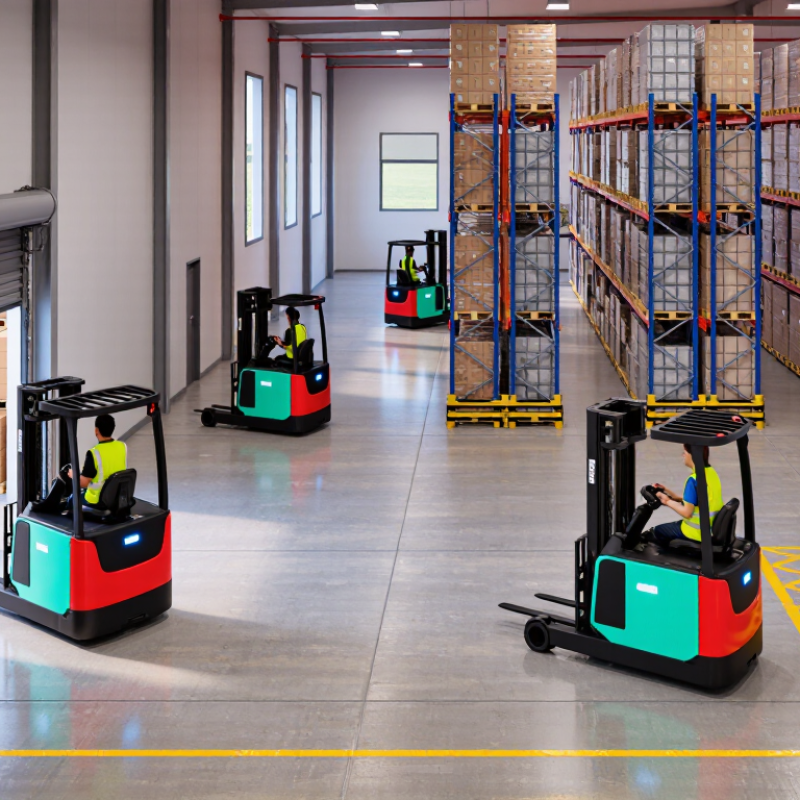
Start with the truck’s job, not its brochure. Counterbalance forklifts suit mixed loading tasks and open areas. Reach trucks work well in narrow aisles and tall racking. Electric pallet trucks move goods across docks and warehouse floors, but they are not replacements for every lift truck. Check turning space, floor condition, ramps, and door clearances before comparing models. Measure twice.
Rated capacity depends on the load center and lift height, not just the number on a sales sheet. A long pallet or fitted attachment can reduce safe lifting capacity. Compare the truck’s capacity chart with your heaviest real load, including packaging. Also consider how often operators lift near maximum height. Paper figures can mislead. Ask a qualified dealer to confirm the setup against your actual loads.
Battery choice affects runtime, charging routines, and upkeep. Lead-acid batteries may cost less initially, but they need regular maintenance and planned charging time. Lithium-ion batteries can support opportunity charging during breaks, though the truck and charger must be compatible. Estimate hours per shift, travel distance, and access to charging points. A short workplace trial can reveal awkward turning or charging gaps that a spreadsheet misses. No comparison is perfect. Recheck your assumptions after operators use the truck on a normal shift.
Check Fit with Your Workplace Layout and Operating Conditions
An electric forklift should fit the space where it will actually work, not just the dimensions on a floor plan. Measure aisle width, door openings, turning areas, and overhead clearance, including lights and sprinkler pipes. Check the tightest turn with a representative load. Measure twice.
Floor conditions matter too. A smooth warehouse floor differs from a cracked loading apron or a sloped ramp. Note any thresholds, standing water, and outdoor travel. These details affect traction and handling, so discuss them with a qualified equipment provider before choosing a truck. I would not treat a catalog turning figure as a guarantee; real loads and attachments can change how much room a maneuver needs.
Then match the forklift to the daily routine. Record typical load weights, lift heights, and how often loads move. Consider shift length, charging access, and whether a battery can recharge during planned breaks. A truck that fits the aisle may still slow work if its operating cycle does not suit the schedule. If possible, test a shortlisted model in the busiest area with normal loads. Watch for blocked sightlines, awkward reversing, and frequent near-stops. A trial may reveal a layout problem, not a forklift problem, and that distinction is easy to miss.
Evaluate Total Ownership Costs, Charging, and Maintenance Support
Choosing an electric forklift on purchase price alone can hide expensive surprises. Compare total ownership cost across the expected service life: purchase, electricity, batteries, chargers, maintenance, downtime, and resale. The U.S. Department of Energy reports that electric vehicles convert over 77% of grid energy into movement, compared with about 12–30% for gasoline vehicles. This is a broad vehicle benchmark, not a forklift guarantee; lift cycles, load weight, and charging losses change real-world results.
Map shifts before selecting a battery. A truck running two shifts may need opportunity charging, a spare battery, or a longer charging window. Check available electrical capacity, charger installation costs, and whether charging can happen during breaks without blocking aisles. Small details matter. Ask suppliers for measured energy use under a duty cycle similar to yours, not just a catalog estimate.
Maintenance support deserves equal scrutiny. Request written service response times, technician coverage, parts availability, battery warranty terms, and a clear maintenance schedule. Lead-acid batteries require watering and dedicated charging space; lithium-ion systems reduce some routine tasks but still need compatible chargers and qualified service. A cost model is never perfect. Electricity rates may change, and downtime is easy to underestimate, so test assumptions against actual shift logs before committing.
How to Choose the Best Electric Forklift for Your Business
Compare five-year ownership costs—not just the purchase price. Charging needs, energy use, maintenance, and battery replacement can all affect the total.
Planning example: Estimated costs are in USD for one forklift operating 2,000 hours per year over five years. Energy estimates assume electricity at $0.12 per kWh and use 4.0 kWh per operating hour for lead-acid and 3.5 for lithium-ion. Equipment, maintenance, and replacement figures are illustrative estimates, not market quotes. Actual costs vary by truck, battery, workload, utility rates, and service terms. Lead-acid batteries typically need longer charging and cooling periods; lithium-ion batteries can often be opportunity-charged, subject to equipment specifications. Confirm charging requirements and maintenance support with suppliers before buying.
Verify Safety Features, Compliance, and Performance Before Purchase
Before buying an electric forklift, inspect the safety systems in person. Check the seat belt, overhead guard, brakes, horn, lights, and any required restraint system. Confirm the data plate matches your heaviest load and its load center. OSHA’s powered industrial truck guidance cites estimates of 85 fatal accidents and 34,900 serious injuries annually. The figures are sobering. Treat them as a reason to verify operator protections, not as a prediction for your site. In the United States, check applicable OSHA requirements, including 29 CFR 1910.178, and confirm the truck’s training and inspection provisions fit your operation.
Tips: Ask for a documented inspection and maintenance history. Test the truck with a representative load, on your actual floor, through your narrowest aisle. Listen for unusual motor or brake noise. It matters.
Compliance is only part of the decision. Check that the charger suits the battery, and that charging space, ventilation, and shift schedules are workable. Compare rated capacity, turning radius, lift height, and runtime against your daily routes—not a best-case specification sheet. Ask operators to try the controls and visibility from the seat. A truck can meet its rating yet feel awkward around a tight corner. That detail is easy to overlook, and I would not dismiss it. Keep written records of test results and unresolved concerns before approving a purchase.