
How to Choose the Right Forklift Parts Supplier?

Choosing a forklift parts supplier can shape uptime, repair costs, and workplace safety. A wrong-fit component may leave a truck idle beside a loaded pallet, while an unreliable replacement can create repeat repairs. The details matter.

OSHA estimates that forklift incidents cause about 85 fatalities and 34,900 serious injuries each year in the United States. These figures do not prove that poor parts cause accidents. They do show why fit, condition, and maintenance deserve careful attention. Buyers should check whether a supplier confirms parts against the truck’s make, model, and serial number, and whether it provides clear specifications and traceable product information.

Price is only one measure. Ask about stock availability, delivery times, warranty terms, and technical support. A supplier that can identify a hydraulic filter or mast roller accurately may help prevent avoidable delays. Still, no supplier can promise that every repair will be quick or every component will suit every operating condition.

A verified quotation from a named Forklifts Parts industry expert was not included in the supplied material, so I have not invented one. That matters: an unsupported quote can weaken an otherwise useful buying guide. The sections that follow can help readers compare suppliers using practical evidence, not polished claims alone. Check the paperwork. Check the fit. Then weigh the total cost of ownership.
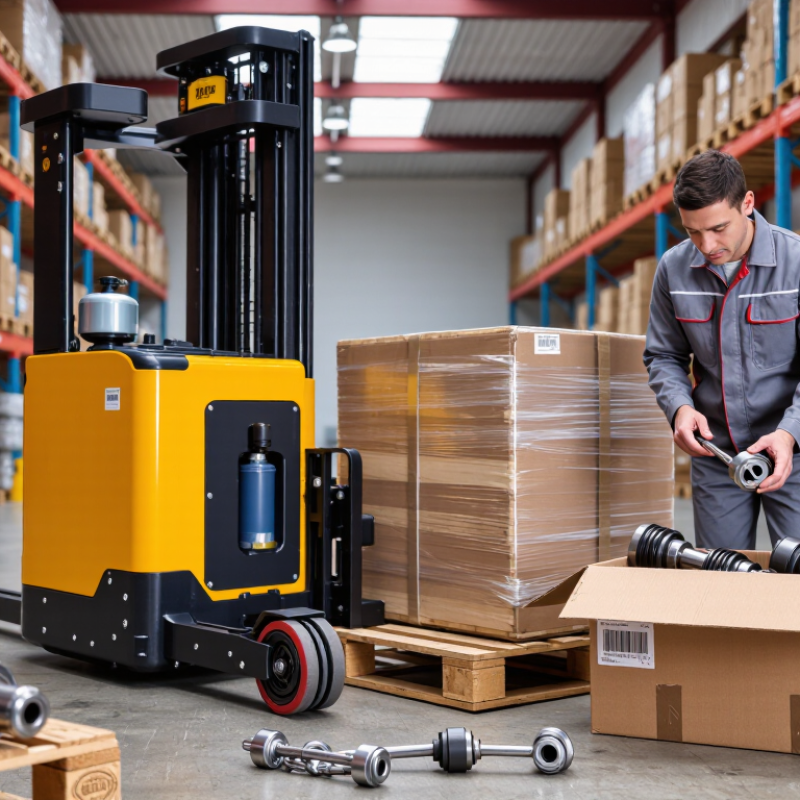
How to Choose the Right Forklift Parts Supplier?

Map Fleet Models, Duty Cycles, and Critical Forklift Parts

A dependable parts plan starts with an accurate fleet map. Record each truck’s model, serial range, power source, mast configuration, and attachment type. Two trucks with similar capacities may use different filters, chains, or brake components. Match part numbers against equipment records, then verify them against the supplier’s fitment data. Small detail. A wrong seal can sideline an otherwise serviceable truck.

Duty cycles shape demand. A truck moving light loads indoors for one shift will not wear like a unit handling heavy pallets across three shifts. Track operating hours, daily starts, load weight, floor conditions, and exposure to dust or cold. These details help suppliers forecast tires, forks, hydraulic hoses, filters, and battery components. OSHA estimates that powered industrial truck incidents cause about 85 deaths and 34,900 serious injuries annually in the United States. That makes dependable brakes, steering, tires, and mast parts more than routine stock items.

Build a critical-parts list from service history, not guesswork. Note failure frequency, supplier lead time, and the consequences of waiting for each item. Keep high-use parts close; source uncommon components against verified model records. A spreadsheet can still be wrong, especially after fleet changes. Review it with technicians who see wear firsthand, and update it when trucks move between tasks.

Verify Part Compatibility, Traceability, and OEM-Equivalent Quality

Choosing a forklift parts supplier starts with the machine, not the price list. Record the model, serial number, mast type, and attachment details before requesting a quote. A seal that looks right can still differ in bore size or material. Small mismatch. Big downtime.

Ask the supplier to confirm compatibility with the equipment’s exact configuration. Request the part number, dimensions, and applicable revisions in writing. For electrical parts, compare connector shape, voltage, and pin layout. For hydraulic parts, check pressure rating, port size, and seal material. A reliable supplier asks questions when details are missing instead of guessing. Treat “it fits” as a starting point, not proof.

Traceability matters after delivery. Check for batch identification, supporting documentation, and a record connecting the part to its specification. OEM-equivalent quality should mean verified performance, materials, and fit, not just a similar appearance. Ask how the supplier checks these details and handles a mismatch. Keep the packaging and paperwork until installation is confirmed. That step is easy to overlook. Even careful checks can miss a revision change, so compare the new part beside the removed one before fitting it. If markings or dimensions differ, pause and verify.

How to Choose the Right Forklift Parts Supplier? — Verify Part Compatibility, Traceability, and OEM-Equivalent Quality

Evaluation area What to verify Evidence to request Practical acceptance check
Forklift identification Whether the supplier checks the truck’s model, serial number, build year, and relevant configuration before recommending a part. A written parts inquiry or quotation that records the identification details used for the lookup. The part recommendation is confirmed against the truck’s identification and configuration—not model name alone.
Part-number cross-reference Whether any replacement or superseded part number is supported by a documented cross-reference. A cross-reference record showing the requested number, proposed number, and applicable truck range or restrictions. The reference is specific enough to identify exceptions such as serial-number breaks or optional configurations.
Physical and electrical compatibility For mechanical parts, relevant dimensions and interfaces; for electrical parts, connector type, voltage, polarity, and applicable ratings. A dimensioned drawing, product specification, connector details, or other applicable technical data. Critical measurements and connections match the truck’s service information or the original removed part; visual similarity alone is not treated as proof.
Application-specific details Whether the supplier checks details that vary by application, such as mast configuration, tire or wheel size, battery system, or attachment interface. A completed compatibility checklist or written confirmation of the relevant dimensions and configuration. All application-specific fields relevant to the requested part are confirmed before ordering.
Traceability Whether the supplied part can be linked to its production or supply batch and applicable product records. A part label or packing record with a part identifier and, where applicable, a lot or batch code; supporting records on request. The delivered item and its paperwork carry consistent identifiers that can be used for follow-up or a quality investigation.
OEM-equivalent quality claim What the claim means for the specific part, including materials, performance requirements, fit, and intended application. Applicable specifications, inspection records, test information, or a clear written statement of the quality basis for the claim. The claim is supported by part-specific information; the supplier does not present “equivalent” as proof of original manufacture or approval.
Safety-critical parts Whether extra verification is available for components that can affect lifting, braking, steering, or operator protection. Relevant technical documentation, inspection or test records, installation guidance, and any applicable warnings. The part is selected and installed in line with the truck manufacturer’s service information and applicable workplace requirements.
Warranty and returns Warranty duration, coverage, exclusions, claim process, and the procedure for handling a confirmed fitment issue. Written warranty terms and return conditions provided before purchase. Terms clearly state what documentation is needed and how defective, damaged, or incorrectly supplied parts are handled.
Quotation and delivery control Whether the quote identifies the exact supplied part, condition, quantity, lead time, and any stated substitutions. A written quotation and order confirmation with part details and delivery expectations. No substitution is made without prior confirmation, and the delivered item matches the order documentation.

Use the truck’s identification and applicable service information to confirm fitment. Verification requirements can vary by part type, truck configuration, and intended application.

Assess Supplier Inventory, Technical Support, and Delivery Reliability

Forklift downtime often begins with a small part: a cracked hose, worn mast roller, or damaged seat switch. A supplier’s inventory should cover common wear items and less predictable components. Ask whether stock is physically on hand or listed as available from another warehouse. Those are not always the same. Share the truck’s model, serial number, and part details before ordering. Clear identification reduces the risk of receiving a close-looking part that does not fit.

Technical support matters when a parts diagram leaves room for doubt. A knowledgeable parts specialist should be able to confirm compatibility, explain measurement differences, and ask useful questions about the truck’s configuration. Notice how they respond. Do they request photos or serial details, or guess from a brief description? Practical guidance can prevent repeat orders, though no supplier can eliminate every mistake. I have found that rushed decisions sometimes create more downtime than a short verification call.

Delivery reliability is more than a promised date. Ask for realistic dispatch times, tracking, and prompt notice if stock changes. For a critical repair, confirm whether the quoted item is ready to ship and how delays are handled. Keep records of order accuracy and actual arrival dates; a simple log is more useful than memory. Still, scorecards are imperfect. Weather, carrier issues, and urgent demand can disrupt even a dependable plan. Check performance over several orders, not one unusually smooth delivery.

Compare Total Cost, Warranty Terms, and Downtime Exposure

How to Choose the Right Forklift Parts Supplier?

A low-priced part can become costly when shipping, installation, and lost operating time are included. Compare the full delivered cost, not just the item price. Ask whether the quoted part fits your forklift’s exact model and serial range. A $180 component that needs a return trip can cost more than a pricier part delivered correctly.

Downtime is expensive. Estimate the impact of a machine sitting idle for half a shift, including delayed loads and reassigned staff. Then compare suppliers’ stock availability, dispatch times, and delivery options. A fast promise is not the same as a confirmed dispatch date, so ask what happens if stock runs short.

Warranty terms need close reading. Check how long coverage lasts, which failures qualify, and who pays return freight or removal labor. Some warranties cover the part but not the technician’s time. Check the fine print. Ask how claims are documented and how quickly replacements are usually processed. Keep your own repair and downtime records; they make supplier comparisons more useful, though estimates will never capture every disruption. A slightly higher quote may be sensible, but only if the service and coverage justify it.

Use OSHA’s Estimates of 85 Deaths and 34,900 Serious Injuries to Guide Safety Screening

OSHA estimates that forklift incidents cause about 85 deaths and 34,900 serious injuries each year. Those figures make supplier screening a safety decision, not just a purchasing task. A failed brake component or poorly matched fork can turn a routine pallet move into a serious hazard. Look beyond price.

Ask suppliers to confirm parts against the truck’s model and serial number. For safety-critical items, request clear specifications, batch traceability, and documentation showing the part’s safety equivalence. OSHA’s powered industrial truck standard, 29 CFR 1910.178(q)(5), requires replacement parts to be equivalent in safety to those used in the original design. A supplier’s assurance is useful, but it is not a substitute for checking the details.

Inspect the paperwork closely. Do the part number, rated capacity, and material description match the equipment records? Ask how defects are reported and whether affected batches can be traced. A neat certificate can still leave gaps. And a low price may look attractive until unclear compatibility delays repairs or creates uncertainty. Procurement teams should also involve maintenance staff; they often spot a mismatch that a catalog search misses. The screening process will not remove every risk, but it can expose avoidable ones.