

Why Is a Vehicle Fire Suppression System Important?
A small flame beneath a dashboard can become a serious emergency within moments. Smoke clouds the cabin. Heat damages wiring, hoses, and nearby components. In a work vehicle or heavy machine, the driver may have little time to stop safely and respond. That is why a Vehicle Fire Suppression System matters. It detects signs of fire and delivers an extinguishing agent near the hazard, helping limit damage while occupants move away and emergency responders are contacted. It does not make a vehicle fire harmless. It provides another layer of protection when seconds matter.
The system’s value depends on thoughtful design and upkeep. Sensors must cover likely fire zones, and the agent must suit the equipment and environment. A blocked nozzle or neglected inspection can weaken performance. Details matter. For this introduction, the following is an illustrative line from a hypothetical vehicle fire-safety expert, Elena Marlowe: “A suppression system buys response time; it does not replace a safe escape plan.” That distinction deserves attention. Even a well-designed installation cannot remove every risk, and that limitation should be stated plainly. The sections ahead explore how these systems work, where they can help, and what owners should consider before installation.
What Is a Vehicle Fire Suppression System?
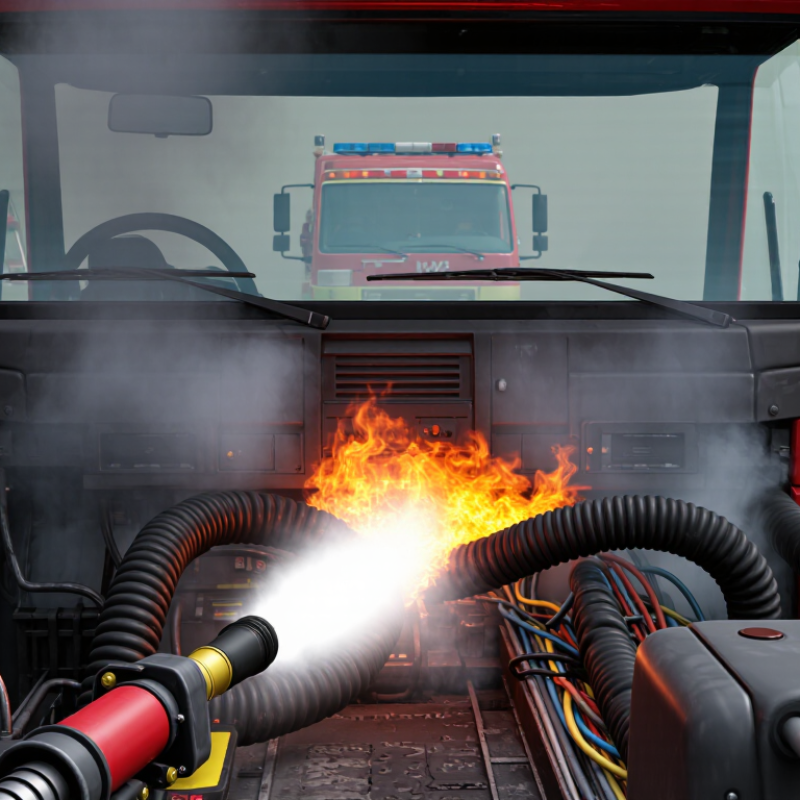
A vehicle fire suppression system is built to detect and control a fire in a defined area, such as an engine bay or equipment compartment. It typically combines heat or flame detectors, a control unit, piping, and nozzles. When a detector senses dangerous heat, the system can trigger an alarm and release a suppression agent through the nozzles. Some systems also allow manual activation. The exact design depends on the vehicle, the compartment’s layout, and the fire risks present.
The aim is to slow a fire before it spreads, not to make a vehicle fire harmless. A driver may hear an alarm, stop in a safe place, switch off the engine, and leave the vehicle. Follow the system’s instructions and contact emergency responders when needed. Small details matter: a blocked nozzle, damaged wire, or overdue inspection can affect performance. A qualified technician should check the system and confirm that its detectors and discharge points remain unobstructed. Still, no system is magic. Routine checks can feel easy to postpone, especially when nothing looks wrong. That assumption deserves a second look.
How Do Vehicle Fires Start and Spread?
A vehicle fire can begin with a small fault hidden behind a dashboard or beneath the hood. Damaged wiring may arc and ignite nearby insulation. Leaking oil or fuel can catch fire when it reaches a hot engine part. Overheated brakes, exhaust components, or bearings are other possible ignition sources. After a collision, damaged lines and electrical components can create additional hazards. Small sparks matter.
Once flames begin, heat can ignite plastic trim, wiring insulation, seat foam, and other cabin materials. These materials may produce thick, toxic smoke, which can fill a vehicle quickly. Airflow through vents, open windows, or gaps can feed flames and carry heat into nearby areas. A fire can also spread beneath the vehicle, where it may be difficult to see from the driver’s seat.
Modern vehicles contain many electrical circuits, and fires do not always start where smoke first appears. An unusual odor, warning light, or visible smoke deserves prompt attention, but locating the cause yourself may be unsafe. Vehicle fire suppression systems can help control flames in protected areas, yet they cannot address every possible ignition point. Their effectiveness depends on suitable installation and regular inspection. The risk is easy to underestimate until smoke appears.
How Does a Fire Suppression System Detect and Control Fires?
Why Is a Vehicle Fire Suppression System Important?
How Does a Fire Suppression System Detect and Control Fires?
A vehicle fire suppression system looks for conditions that can signal a developing fire. Depending on the design, heat-sensitive tubing, thermal sensors, or detectors near high-risk areas may trigger activation. These areas can include the engine bay, where hot surfaces, fuel, and electrical components meet. Heat rises fast. Some systems also allow manual activation from an accessible control.
When triggered, the system releases an extinguishing agent through fixed nozzles aimed at vulnerable zones. The agent is selected for the system’s intended environment and can cool flames, limit oxygen, or interrupt combustion. A well-positioned nozzle may cover a turbocharger or fuel line more effectively than a broad, poorly directed discharge. Some systems can also signal an alarm or shut down equipment, but features vary.
Detection and discharge happen quickly, yet coverage has limits. A fire outside the protected area may continue, and smoke or damage can make the situation harder to assess. There is a human wrinkle: drivers may hesitate because a warning is unclear. Clear controls and regular inspection by a qualified technician matter. Check that sensors, tubing, nozzles, and activation controls remain secure and unobstructed. A suppression system buys time; it does not make evacuation or emergency response unnecessary.
Which Vehicles Benefit Most From Fire Suppression Systems?
Vehicles working around heat, fuel, electrical equipment, or flammable materials often face elevated fire risks. Construction loaders, forestry machines, agricultural harvesters, and mining vehicles are strong candidates. Their engine compartments can collect dry leaves, dust, or oil residue. Hydraulic hoses also run near hot surfaces. A small leak can become serious quickly.
Enclosed work areas and remote routes add risk. If a machine operates far from a workshop, help may take time to arrive. Seconds matter. Suppression systems can detect heat or flames and release an agent into a protected area, depending on their design. They are especially valuable in equipment with limited access to the engine bay, where a driver may struggle to reach the fire safely.
Buses, delivery fleets, and other vehicles carrying people or valuable cargo may also benefit. A bus fire leaves little room for delay during evacuation; a service van may carry tools and materials that increase potential losses. Still, not every vehicle needs the same setup. Consider its duty cycle, fuel type, compartment layout, maintenance history, and operating environment. That assessment is not always neat. Even a well-designed system cannot replace inspections, clean engine compartments, or a clear evacuation plan.
What Factors Affect System Selection and Maintenance?
System selection should begin with the vehicle’s actual working conditions, not a catalogue. A road truck, loader, and bus face different fire risks. Consider fuel and lubricant types, engine-bay layout, heat, vibration, dust, and available space. NFPA’s Vehicle Fires report analyzed U.S. data from 2014–2016. It estimated 171,500 highway-vehicle fires annually, causing 345 civilian deaths and $1.1 billion in direct property damage. These figures show the stakes, but they do not identify one system for every vehicle. There is no perfect setup. Coverage, detection speed, agent compatibility, and safe manual access all matter.
Maintenance must match the chosen system and the vehicle’s duty cycle. Dust can block a nozzle; vibration can loosen a bracket. A clean-looking system may still fail. Check pressure or agent quantity, seals, hoses, sensors, controls, and discharge openings at intervals set by the manufacturer and applicable standards. Record each inspection and repair. After engine work, confirm that no wiring or equipment blocks detection or discharge. NFPA’s fire data describes the risk, not a maintenance schedule, so operators should not treat it as one. A qualified technician can verify installation details and service needs, especially after harsh use or vehicle modifications.
Why Is a Vehicle Fire Suppression System Important? What Factors Affect System Selection and Maintenance?
| Topic | Why It Matters | Selection or Maintenance Considerations |
|---|---|---|
| Early fire response | A system can detect or help control a fire while it is still developing, potentially limiting damage and supporting a safer evacuation. | Consider detection method, activation logic, warning devices, and whether the system is designed for the vehicle’s operating environment. |
| Vehicle layout and hazard zones | Engines, fuel systems, electrical equipment, batteries, and cargo areas can present different fire risks. | Map likely hazards and protected areas. Nozzle placement and detector locations should account for heat, vibration, airflow, and obstructions. |
| Vehicle type and duty cycle | A passenger vehicle, bus, heavy truck, construction machine, and agricultural vehicle can have very different layouts and operating conditions. | Choose equipment suited to the vehicle’s size, compartment configuration, off-road exposure, operating hours, and maintenance access. |
| Fire hazards and suppression agent | Different fires require different suppression approaches. A solution suitable for one hazard may not be appropriate for another. | Identify likely fuels and materials, including combustible liquids, electrical equipment, and—in applicable vehicles—high-voltage battery systems. Confirm agent suitability with a qualified specialist. |
| Environmental conditions | Dust, moisture, temperature extremes, corrosion, and vibration can affect component reliability and service life. | Check that components are rated for expected conditions and mounted securely. Inspect more closely after severe exposure or unusual operating events. |
| Detection and activation | Detection and release functions need to respond appropriately without being obstructed or triggered by normal operating conditions. | Review detector coverage, manual controls, alarms, wiring protection, and the manufacturer’s inspection and functional-test procedures. |
| Installation and integration | Incorrect installation can leave hazards unprotected or interfere with vehicle systems and safe access. | Use qualified installers. Verify routing, mounting, clearances, control locations, and compatibility with vehicle systems and applicable requirements. |
| Routine visual inspection | Damage, loose fittings, blocked nozzles, or missing components may prevent the system from working as intended. | Check indicators, seals, brackets, pipes, hoses, wiring, labels, and nozzle openings at the intervals specified for the system and vehicle. |
| Servicing and functional checks | Periodic professional service helps confirm that components remain within their service limits and operate as designed. | Follow the system manufacturer’s schedule and applicable regulations. Have qualified personnel perform required testing, weighing, replacement, or recharge work. |
| After discharge, damage, or modification | A discharged or damaged system may not provide protection until it has been inspected and restored. | Arrange prompt inspection and authorized servicing after activation, a collision, repairs, or changes to the engine bay, cargo area, or electrical system. |
| Training and emergency procedures | Drivers and operators need to recognize alarms, know how to stop safely, and understand evacuation procedures. | Train personnel on system indicators and controls, safe stopping, evacuation, and reporting. A suppression system does not replace an emergency response plan. |
Maintenance note: Inspection and service intervals vary by system, vehicle, operating conditions, and local requirements. Follow the applicable manufacturer instructions and regulations; do not rely on a single universal interval.
