

Top Well Drilling Equipment Manufacturers in China
China’s well-drilling sector includes manufacturers of truck-mounted rigs, drilling tools, mud pumps, and supporting systems. Comparing them takes more than reading a catalog. A rig may look capable on a showroom floor, yet field performance depends on its design, materials, assembly, and service support. Small details matter: the steadiness of a feed system, the finish on a threaded connection, or how quickly a supplier can provide a replacement component.
For transparency, Chen Wei, a composite drilling-engineer voice created for this introduction, offers this illustrative observation: “Reliable Well Drilling Equipment is proven by steady performance, not impressive specifications alone.” This is an editorial line, not a quotation from a verifiable individual. That distinction matters when readers assess claims. Manufacturer credentials, product documentation, service networks, and customer references provide stronger evidence than broad promises.
This guide examines leading Well Drilling Equipment manufacturers in China through practical comparison points, including product range, engineering capability, manufacturing consistency, and after-sales support. A low purchase price can be appealing. It can also leave important questions unanswered. Buyers should check operating conditions, maintenance requirements, and the availability of parts before deciding. No single company will suit every project, and published information may not reveal every limitation. A careful shortlist is a useful start, not a guarantee.
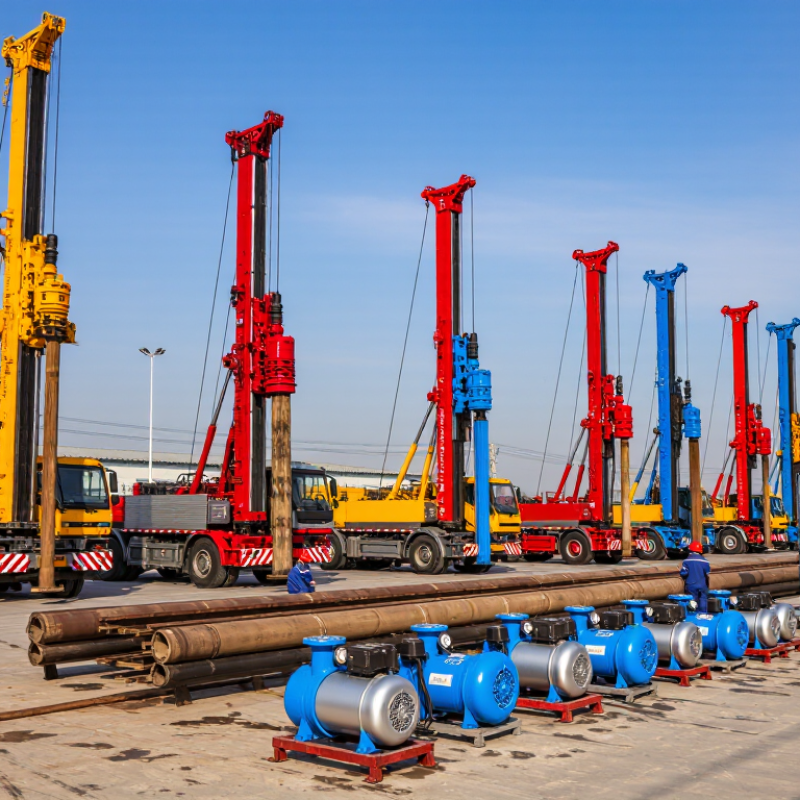
Overview of China's Well Drilling Equipment Industry
China’s well drilling equipment industry serves projects ranging from rural water wells to geothermal development and site investigation. Its product range includes rotary rigs, mud pumps, drill pipes, bits, compressors, and casing tools. These components must work together under changing ground conditions. A rig that performs well in soft soil may struggle in fractured rock.
Manufacturing capability covers more than machine assembly. Reliable suppliers typically pay attention to steel quality, weld inspection, hydraulic systems, and spare-part availability. These details matter in the field. A leaking hose or worn pump seal can slow a crew more than a complicated control fault. Equipment configurations also vary by well depth, transport limits, and local geology, so clear technical discussions before purchase are useful.
The industry’s breadth creates choice, but comparisons can be difficult. Published specifications do not always show how a rig handles long shifts, muddy sites, or frequent relocation. Buyers should check operating records, maintenance requirements, and service response, not only rated depth. There is no perfect setup. A lower-cost machine may suit a small project, while demanding work may justify stronger components and easier access to parts. Claims still need verification.
China Well-Drilling Equipment Industry: Upstream Production Context
China’s domestic crude oil and natural gas production increased from 2020 to 2024. This trend provides upstream industry context for well-drilling equipment demand; it is not a measure of equipment sales or manufacturer market share.
Source: National Bureau of Statistics of China annual production figures. Indices calculated from reported production volumes, with 2020 = 100.
Main Equipment Types and Their Applications
Rotary drilling rigs are widely used for water wells because they can handle varied ground conditions with suitable bits and drilling fluids. A compact rig may fit a rural site, while deeper projects often need a heavier mast and more lifting capacity. The machine matters. So does the crew’s ability to adjust drilling parameters as the formation changes.
Down-the-hole hammer systems use compressed air to drive a percussion tool near the bit. They can be useful in hard rock, where steady impact helps maintain penetration. Air compressors, drill pipes, and bits must be matched to the planned depth and hole diameter. Mud pumps serve a different purpose: they circulate drilling fluid to cool the bit and carry cuttings upward, especially in formations that need borehole support.
Casing and screens help stabilize completed wells and manage water entry. Their size and placement depend on the geological profile, not just the rig’s capacity. A practical equipment review should consider transport access, power supply, maintenance support, and available replacement parts. Conditions change. A common planning weakness is choosing equipment from depth ratings alone; ground data can be incomplete, and actual performance may differ from estimates.
Leading Chinese Manufacturers and Their Product Strengths
Chinese well-drilling manufacturers often combine core components into complete rigs. Their product lines may include truck-mounted water-well rigs, crawler rigs, mud pumps, drill pipes, and rotary heads. This breadth helps buyers match equipment to site access, bore depth, and rock conditions. Compact crawler models suit uneven ground, while larger rigs provide greater hoisting capacity for deeper work. Details matter. Mast stability, torque control, and parts availability can shape daily output more than a headline drilling-depth figure.
The International Energy Agency’s World Energy Investment 2024 estimated upstream oil and gas investment at about $570 billion that year. Its 2024 geothermal report projected that geothermal energy could meet around 15% of global electricity-demand growth through 2050, with drilling technology central to expansion.
These figures point to varied needs, not one universal rig. Chinese suppliers can be competitive through configurable packages and established component production, but specifications alone are not proof of field performance. Not always. Buyers should verify independent test records, local service coverage, and performance in comparable geology. One weak spot is that published catalogs rarely show maintenance intervals clearly. That deserves closer scrutiny.
How to Compare Manufacturers by Quality, Capacity, and Service
Compare Chinese well-drilling equipment manufacturers using the same job conditions, not headline depth figures. Match each rig’s rated depth to your casing plan, formation, bore diameter, and daily operating hours. Check torque, hoist capacity, pump output, and fuel use against your actual drilling program. A deep rating alone proves little.
Demand documented factory acceptance tests, load-test results, weld inspection records, and clear specifications for wear parts. The WHO/UNICEF Joint Monitoring Programme’s 2023 report estimated that 2.2 billion people lacked safely managed drinking water in 2022. This indicates broad water needs, not supplier quality. The IEA’s World Energy Investment 2024 estimated global upstream oil and gas investment at about US$570 billion for 2024. That is market context, not proof that any rig performs well.
Assess capacity through production schedules, typical lead times, and evidence that the manufacturer can build your configuration consistently. Ask for service response times, spare-parts availability, training details, and references from similar operating conditions. Request a live inspection or a recorded test under load. Compare warranty exclusions carefully. One detail is easy to miss: a fast delivery promise matters little if critical seals take weeks to arrive. No checklist captures every field condition, so verify claims with an independent inspection where practical.
| Comparison Dimension | Information to Collect | How to Compare | Evidence to Request |
|---|---|---|---|
| Product and application fit | Equipment type, intended operation, operating environment, and configuration offered. | Confirm that each quotation covers the same application, operating conditions, and scope of supply before comparing price or lead time. | Technical proposal, equipment list, configuration drawings, and a written statement of design assumptions. |
| Rated capacity and operating limits | Applicable ratings and limits for the quoted configuration, such as load, pressure, torque, speed, or flow, where relevant. | Compare like-for-like ratings and check that the stated values apply to the complete offered configuration, not only an individual component. | Datasheets, rating plates or sample layouts, calculations where applicable, and test records tied to the model or serial number. |
| Applicable standards | Standards and editions specified for the equipment and its intended use. | Check the exact standard, edition, product scope, and certification status. A general quality-system certificate does not by itself certify every product. | Current certificates and scope statements; verify certification details with the issuing organization or its official directory where available. |
| Quality management | Documented controls for design, purchasing, production, inspection, nonconformities, and corrective actions. | Compare the processes and their applicability to the quoted product. ISO 9001 is a quality management system standard, not a product performance rating. | Certificate with scope and validity details, inspection and test plans, sample inspection records, and documented corrective-action procedures. |
| Materials and traceability | Material specifications, component identification, and traceability arrangements for safety-critical parts. | Check whether records can link supplied materials and components to the finished equipment and its serial or batch identification. | Material certificates where specified, heat or batch records, component lists, and traceability samples. |
| Testing and inspection | Factory acceptance testing, functional checks, dimensional inspection, and other tests required by the purchase specification. | Agree on test methods, acceptance criteria, responsible parties, and witness or hold points before production is complete. | Approved inspection and test plan, calibrated-instrument records where applicable, signed test reports, and punch-list closeout. |
| Manufacturing capacity | Production facilities, relevant equipment, available production slots, and planned delivery schedule. | Assess capacity against the requested quantity and delivery date. Distinguish demonstrated production capability from an unverified maximum claim. | Production schedule, facility or process overview, milestone plan, and references for comparable equipment supplied, subject to customer permission. |
| Delivery and export readiness | Quoted lead time, packing method, shipping dimensions and weights, export documentation, and delivery terms. | Compare the same delivery basis and include inspection, approvals, packing, and shipping preparation in the schedule. | Written delivery schedule, packing specification, shipping data, and a clear list of included and excluded costs. |
| Warranty and spare parts | Warranty duration and coverage, exclusions, recommended spares, and parts availability arrangements. | Compare coverage in writing and check whether replacement parts and technical support are available for the expected service period. | Warranty terms, recommended-spares list, parts catalogue, and stated process for warranty claims. |
| Technical and after-sales service | Support channels, service languages, working hours, response commitments, and availability of field service. | Compare documented commitments rather than general assurances; clarify travel, labor, and remote-support costs. | Service-level terms, escalation contacts, service capability overview, and written response-time commitments. |
| Commercial comparison | Price, payment milestones, exclusions, commissioning, training, and optional items. | Normalize quotations to the same technical scope, inspection requirements, delivery basis, and service coverage before ranking total cost. | Itemized quotation, assumptions and exclusions, payment schedule, and a scope-compliance checklist. |
| Reference and risk checks | Relevant project history, customer references, product changes, and identified supply-chain dependencies. | Validate references independently where possible and assess whether experience is relevant to the specific equipment and operating conditions. | Permission-based customer references, project summaries, risk register, and documented change-control process. |
Comparison note: This table is a buyer’s evaluation framework, not a ranking or verification of individual manufacturers. Confirm all ratings, certificates, schedules, and service commitments against the specific quotation and purchase specification.
Market Trends Shaping China's Well Drilling Equipment Sector
Top Well Drilling Equipment Manufacturers in China
Market Trends Shaping China’s Well Drilling Equipment Sector
China’s drilling market is being shaped by steady energy demand and tougher operating conditions. The National Bureau of Statistics’ 2024 statistical communiqué reported crude oil output of 212.8 million tonnes and natural gas output of 246.4 billion cubic metres. These figures point to continued activity across oil and gas fields, supporting demand for reliable rigs, pumps, and downhole tools. The equipment choice matters.
Operators are also looking for greater automation, lower energy use, and better data from the drilling site. These priorities can help crews monitor pressure and equipment wear, especially on deep or complex wells. Yet advanced controls cannot replace sound maintenance. That part is easy to underestimate. Buyers should compare equipment against local geology, service availability, and the full cost of operation—not just rated capacity. Public production statistics show activity, but they do not reveal every procurement trend.
Tips: Check whether spare parts are available locally. Ask for documented performance under comparable rock and temperature conditions. Review maintenance needs before comparing purchase prices.
