Ultimate Guide to Injection Molding Machine With Robot Tips?
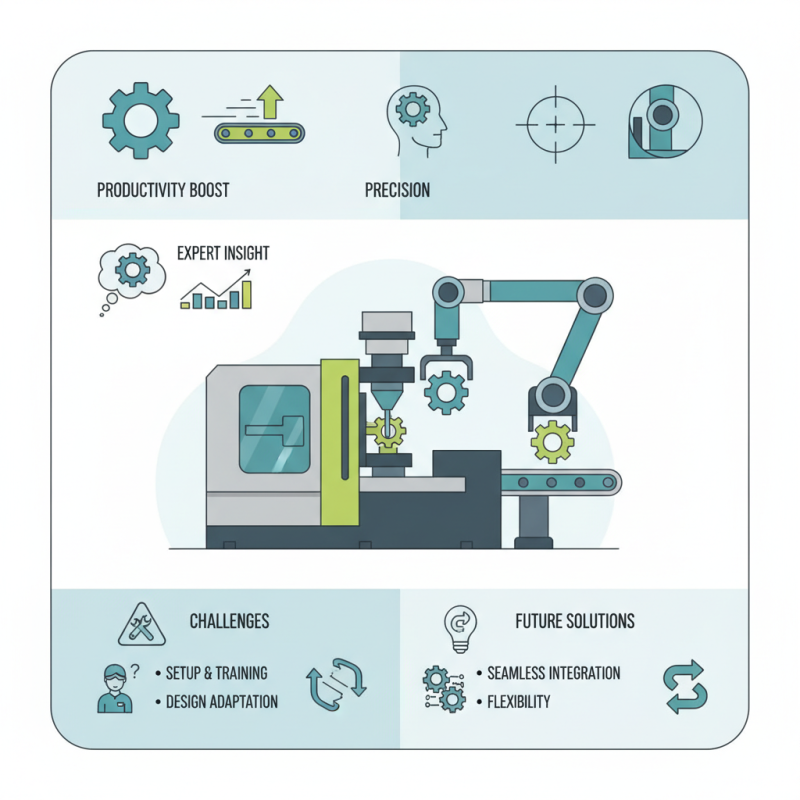
In the world of manufacturing, the "Injection Molding Machine With Robot" is a game changer. Experts emphasize its importance in modern production lines. John Mitchell, a leading authority in robotics, states, "The integration of robotics in injection molding enhances productivity and precision." This technology streamlines processes and reduces human error.
Yet, using an injection molding machine paired with robots isn’t without challenges. Many companies struggle with the initial setup and training. Operators must fully understand both the machinery and robotic programming. This knowledge gap often leads to inefficiencies. Mistakes during the process can be costly.
Moreover, not all designs are compatible with robotic systems. Companies need to adapt their products continually. The need for flexibility arises, pushing manufacturers to rethink their processes. The future of production lies in embracing these complexities and finding solutions for seamless integration.
Understanding Injection Molding Machines: A Comprehensive Overview
Injection molding machines are vital in modern manufacturing. They create various plastic parts used in multiple industries. Understanding how these machines work is essential for anyone in the field. The process involves melting plastic pellets and injecting them into a mold. This creates precise shapes required for different products.
These machines often come with robotic arms for added efficiency. Robots can load materials, remove parts, and even perform secondary operations. This automation boosts production speed and reduces human error. However, integrating robotics can be challenging. Not all machines work seamlessly with robotic systems. Careful planning is required to avoid issues.
Training is another critical aspect. Operators must understand both the machine and the robot's functions. A lack of knowledge can lead to mistakes. Regular maintenance is also necessary to prevent breakdowns. An under-maintained machine can slow down the production process significantly. The balancing act of efficiency and upkeep can prove difficult for many manufacturers.
Ultimate Guide to Injection Molding Machine With Robot Tips
| Dimension | Value |
| Clamping Force (ton) | 50 - 5000 |
| Injection Volume (cm³) | 10 - 10000 |
| Screw Diameter (mm) | 18 - 150 |
| Machine Weight (kg) | 500 - 30000 |
| Cycle Time (seconds) | 5 - 120 |
| Power Consumption (kW) | 2 - 200 |
| Robot Arm Type | Delta, SCARA, Cartesian |
| Automation Level | Manual, Semi-Automatic, Fully Automatic |
Key Components of Injection Molding Machines Explained
Injection molding machines are vital in plastic manufacturing. They consist of several key components, each playing a specific role. The injection unit, for instance, melts plastic pellets and injects them into the mold. The clamping unit holds the mold shut while the plastic solidifies. This system ensures precision and efficiency.
According to a market report, the injection molding machine market is projected to reach $12 billion by 2025. This growth highlights the importance of automation, particularly with robots integrated into the process. Robots assist in loading materials and removing finished products, reducing cycle times significantly. Effective integration can increase productivity by over 30%, showcasing how critical these components are.
However, difficulties exist in balancing efficiency and cost. Some manufacturers struggle with the initial investment for robots, which can reach up to $100,000. Despite long-term savings, the upfront cost may deter smaller businesses. This imbalance creates a challenge that needs addressing for broader industry growth. Understanding these components and their implications can help businesses optimize operations.
Key Components of Injection Molding Machines
Integrating Robotics with Injection Molding: Benefits and Techniques
Integrating robotics with injection molding offers significant advantages. A report from the International Robotics Federation highlights that automation in manufacturing can increase productivity by up to 30%. This increase often comes from reducing manual labor and improving cycle times. For instance, robots can quickly load and unload parts, minimizing human error and accelerating the production process.
However, there are challenges to consider. One common issue is the initial cost of robotic systems. Many companies hesitate to invest due to high upfront costs and the complexity of implementation. Training employees to work with new robotic systems can be time-consuming. A study by the McKinsey Global Institute revealed that 20% of jobs may be displaced by automation in some industries. Despite this, the long-term gains often outweigh these challenges.
Another vital aspect is the precision that robotics can provide. Robotics can achieve tolerances of within a millimeter, ensuring high-quality products. Still, inadequate programming can lead to errors, impacting production quality. Companies must continuously evaluate their robotic technology to ensure optimal performance. Balancing innovation and operational challenges is critical in this evolving landscape.
Optimization Techniques for Enhanced Efficiency in Injection Molding
In the world of injection molding, optimizing efficiency is crucial. One common issue is cycle time. Reducing it can lead to substantial cost savings. Reviewing machine parameters and settings often reveals areas needing adjustment. Monitor the cooling time closely; it can affect production speed significantly.
Implementing automation enhances consistency. Robots can streamline the loading and unloading processes. They reduce human error and increase production rates. However, malfunctions occur occasionally. It's essential to maintain robotic systems regularly. Neglecting maintenance can cause unplanned downtimes.
Tip: Invest in training for your operators. Properly trained staff can spot inefficiencies earlier. They can suggest improvements based on hands-on experience. Additionally, regular feedback sessions can help identify problems. Open communication fosters a culture of continuous improvement.
Maintenance Tips for Injection Molding Machines and Robots
Maintaining injection molding machines and robots is crucial for optimal performance. Regular checks can prevent unexpected breakdowns. Start by inspecting hydraulic systems. Look for leaks and ensure fluid levels are adequate. Dirty filters can cause issues. Clean or replace them frequently to ensure smooth operation.
The robotic arms also require attention. Lubrication is key to reducing wear and tear. Use the right grease based on the manufacturer's guidelines. Pay close attention to joints; they often suffer from neglect. Periodically calibrating the sensors helps maintain accuracy. This can make a noticeable difference in production quality.
Don’t forget about the software. Regular updates can enhance functionality. However, be cautious during installations. Incompatible versions can lead to system errors. Take the time to document maintenance procedures. This not only tracks performance but helps identify issues over time. Reflect on past maintenance tasks; are they yielding the desired outcomes?