


How to Choose the Right 60mm Stainless Tube?
Choosing the right 60mm Stainless Tube involves more than checking its outside diameter. The tube may look perfect on a sample rack, yet fail when exposed to heat, moisture, vibration, or repeated loading. Material grade, wall thickness, surface finish, and manufacturing method all influence its performance. A bright mirror finish is attractive, but it does not automatically indicate superior strength or corrosion resistance.
In practical projects, I have seen buyers focus on the 60mm size and overlook the internal diameter. That small mistake can affect fluid flow, fittings, and installation clearance. Confirm whether “60mm” refers to the outer diameter, inner diameter, or a nominal measurement. Check the stainless grade, such as 304 or 316, against the actual environment. Salt spray, cleaning chemicals, and high temperatures may require different protection. Ask suppliers for mill certificates, dimensional tolerances, test reports, and traceable batch information. Reliable documentation matters.
Do not choose by price alone.
This guide explains how to compare tube specifications, suppliers, and finishing options with greater confidence. It also considers welding quality, cutting accuracy, packaging, and delivery risks. Some recommendations may need adjustment for your application. That is normal. Site conditions often reveal details that drawings miss. Before ordering, confirm load requirements, connection methods, applicable standards, and inspection expectations with a qualified engineer or experienced supplier. A careful selection process can prevent leaks, premature corrosion, costly rework, and unsafe installation.
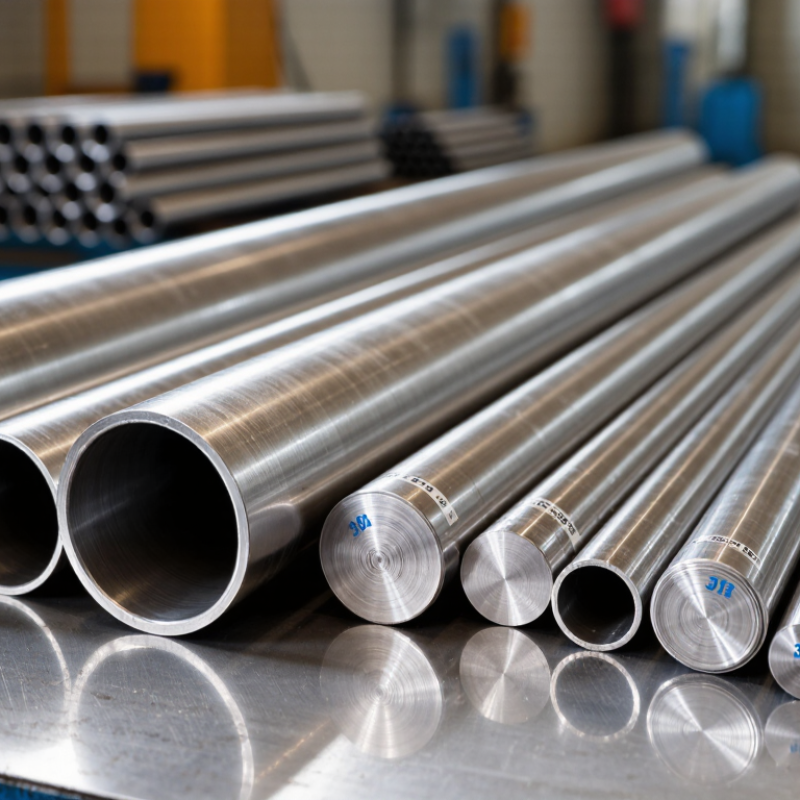
Understanding 60mm Stainless Tube Dimensions and Terminology
How to Choose the Right 60mm Stainless Tube?
A “60mm stainless tube” usually describes the outside diameter, not the inside diameter. A 60 × 2mm tube has a theoretical inside diameter of 56mm. Actual dimensions may vary within the stated tolerance. Always confirm whether the drawing specifies OD, ID, or wall thickness.
Terminology matters. “Tube” is commonly ordered by exact outside diameter and wall thickness. “Pipe” often follows nominal size and schedule systems. ASME B36.19M lists stainless steel pipe dimensions, while ASTM A269 covers general-service welded and seamless tubing. For process applications, ASTM A213 may be more suitable. Grade selection also affects corrosion resistance, strength, welding, and cost. A 304-grade tube may suit indoor equipment, while 316L is often preferred near chlorides. The choice is not automatic. Service conditions decide it.
The World Stainless Association reported 58.4 million tonnes of global stainless crude steel production in 2023. This scale supports broad availability, but it does not guarantee identical tube tolerances between suppliers. I have seen “60mm” treated as a complete specification. It is not. Confirm the grade, manufacturing method, length, surface finish, tolerance, and test requirements. For a 60 × 2mm tube, check whether the quoted wall thickness is nominal or minimum.
Tips: Write the size as OD × wall thickness. Request the applicable standard and material certificate. Check measured samples before full production. This small step prevents expensive rework.
| Dimension or Term | Typical Specification or Example | Meaning | Selection Consideration |
|---|---|---|---|
| Nominal outside diameter (OD) | 60.0 mm | The specified external diameter of the tube before applying the permitted manufacturing tolerance. | Confirm whether the application requires a metric tube with a 60 mm OD or a different nominal pipe designation. |
| Wall thickness | 1.5, 2.0, 3.0, 4.0, 5.0 or 6.0 mm | The material thickness measured between the outside and inside surfaces. | Choose it according to pressure, structural load, corrosion allowance, forming requirements and weight limits. |
| Inside diameter (ID) | ID = OD − 2 × wall thickness | The calculated internal opening of the tube, excluding actual dimensional tolerances. | Check the actual minimum ID when the tube must accommodate a shaft, cable, sensor or fluid flow. |
| 1.5 mm wall example | 60.0 mm OD × 1.5 mm wall; calculated ID: 57.0 mm | A relatively light-wall configuration. | Useful where low mass and easy fabrication are important, subject to the required strength and pressure rating. |
| 2.0 mm wall example | 60.0 mm OD × 2.0 mm wall; calculated ID: 56.0 mm | A common light-to-medium wall option for general tube fabrication. | Verify resistance to denting, vibration and joining heat before specifying it for a load-bearing assembly. |
| 3.0 mm wall example | 60.0 mm OD × 3.0 mm wall; calculated ID: 54.0 mm | A medium-wall configuration with greater section strength than thinner options. | Often considered for frames, supports and fabricated components when additional stiffness is needed. |
| 4.0 mm wall example | 60.0 mm OD × 4.0 mm wall; calculated ID: 52.0 mm | A heavier-wall tube with increased cross-sectional area. | Consider when stiffness, impact resistance or a larger corrosion allowance is required. |
| 5.0 mm wall example | 60.0 mm OD × 5.0 mm wall; calculated ID: 50.0 mm | A thick-wall tube with a smaller internal passage. | Check whether the reduced flow area and increased material weight are acceptable for the design. |
| 6.0 mm wall example | 60.0 mm OD × 6.0 mm wall; calculated ID: 48.0 mm | A heavy-wall configuration with high material usage and a reduced bore. | Use only when the structural, pressure or wear requirement justifies the additional weight and cost. |
| Approximate mass per metre | 2.19 kg/m at 1.5 mm wall to 8.07 kg/m at 6.0 mm wall | Estimated theoretical mass based on a stainless steel density of approximately 7.93 g/cm³. | Actual mass varies with grade, dimensional tolerances, surface condition and manufacturing process. |
| Seamless tube | Manufactured without a longitudinal weld seam | A tube formed from solid material and processed into a hollow section. | May be selected for demanding pressure or temperature service, but the applicable product standard must define suitability. |
| Welded tube | Formed from strip or sheet and joined along a longitudinal seam | The weld creates a visible or internally finished seam, depending on processing. | Often provides efficient dimensional production; confirm weld quality, annealing and testing requirements. |
| Stainless steel grade | Common choices include 304/304L and 316/316L | The alloy designation determines corrosion resistance, weldability, strength and service-temperature capability. | 316/316L generally offers better resistance to chloride-containing environments than 304/304L; confirm the exact service conditions. |
| Surface finish | Mill finish, brushed finish or polished finish | Describes the surface appearance and roughness produced by manufacturing or subsequent finishing. | Choose a finish based on hygiene, appearance, cleanability, friction and exposure to contamination. |
| Dimensional tolerance | Specified by the selected product standard | The permitted deviation from nominal OD, wall thickness, length, ovality or straightness. | Do not assume every 60 mm tube has the same tolerance; state the required standard and tolerance class on the specification. |
| Tube versus pipe | Tube is commonly ordered by actual OD and wall; pipe is commonly identified by nominal pipe size and schedule | The terms are not interchangeable in every standard or application. | Specify outside diameter, wall thickness, grade, manufacturing method, finish and standard to avoid an incorrect substitution. |
| Recommended ordering description | Stainless steel tube, 60.0 mm OD × 3.0 mm wall, specified grade, finish, length and product standard | A complete description defines the main dimensional, material and quality requirements. | Include inspection, certification, end condition and tolerance requirements when the tube is used in a critical assembly. |
| Calculation note: The example inside diameters use the formula ID = OD − 2t. Approximate mass values use the theoretical formula mass = π/4 × (OD² − ID²) × density, with OD and ID in millimetres and density approximately 7.93 g/cm³. Final dimensions, tolerances and pressure suitability must be confirmed against the applicable material and product standard. | |||