

How to Choose the Right Electric Winch
Choosing the right Electric Winch starts with the job, not the largest number on the product label. A winch used to load a vehicle onto a trailer faces different demands from one used for occasional recovery on a muddy trail. Estimate the total load, account for the slope and surface, and leave a sensible capacity margin. A vehicle’s listed weight alone may not reflect the force needed to move it.
Capacity matters. So does the line. Compare rated pulling capacity, cable or synthetic rope, drum dimensions, and recommended line layers. A winch’s stated rating is generally strongest on the first rope layer, where the effective drum diameter is smaller. That detail can change a real pull. Check the manufacturer’s specifications rather than relying on a quick rule of thumb.
Then consider the power source, mounting space, controls, and duty cycle. Measure the bumper or mounting plate before ordering; a few millimeters can create an annoying fit problem. Confirm that your battery and wiring suit the winch, and look for practical features such as a wired or wireless remote. Weather resistance may matter if the unit faces rain, grit, or salt, but no rating makes equipment maintenance-free.
Details matter. Gloves, a clear working area, and a suitable recovery point are part of the setup, not optional extras. I’d also ask how often the winch will actually be used. It is easy to overbuy for a rare task, or underbuy after overlooking a steep approach. The best choice balances capacity, compatibility, and realistic use—and leaves room to reconsider if the job changes.
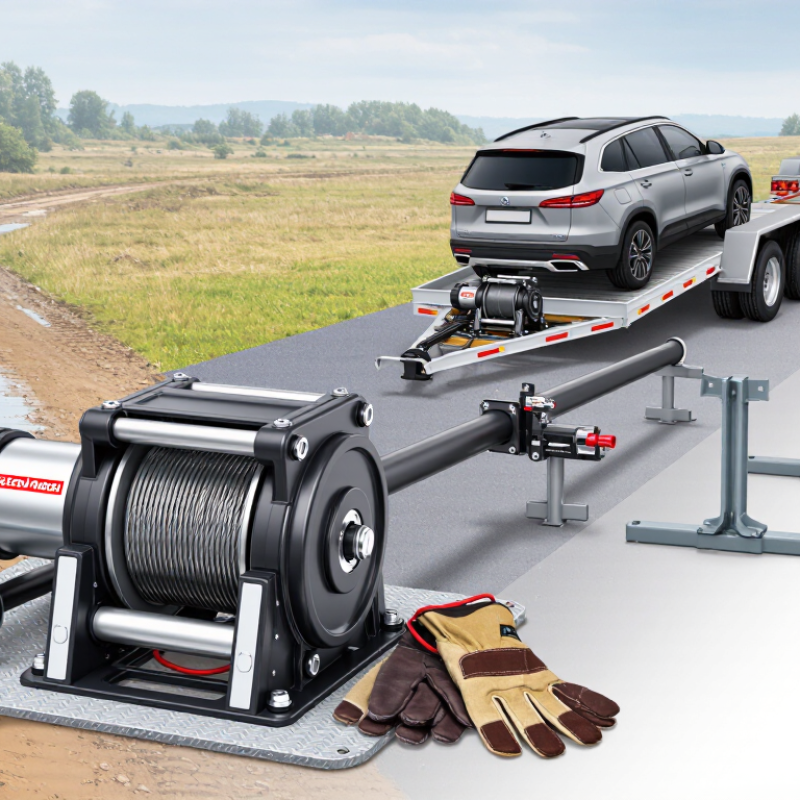
Identify the Winch’s Intended Use and Operating Conditions
Choosing the right electric winch starts with a clear picture of the work it must do. Will it pull a vehicle from soft ground, move equipment across a yard, or assist with a boat on a ramp? Each task creates different loads and demands. Note the object’s weight, the surface, the pulling distance, and how often the winch will operate.
Mud changes everything. A vehicle sunk to its axles can need far more pulling force than its weight suggests. For recovery, consider the rated line pull, rope length, and a secure mounting point. Pulling uphill, through deep mud, or at an angle increases strain. Avoid relying on a single capacity figure; real conditions rarely match a simple calculation. That matters.
The operating environment also guides the choice. Rain, salt spray, dust, and cold can affect electrical connections, controls, and rope condition. Check the winch’s specified operating limits and plan for suitable maintenance. A compact unit may fit a small vehicle, but frequent heavy pulls can overheat its motor. Duty cycle is easy to overlook. I would still question any estimate based on ideal conditions alone.
Before buying, check the available battery supply, cable routing, mounting space, and access to controls. Think about where the operator will stand during a pull. Keep people clear of the line, and use only equipment rated for the task. Record the likely load and conditions; the first estimate may be imperfect, and should be reviewed before use.
Calculate the Required Pulling Capacity and Safety Margin
Choosing a winch starts with the load it must move, not the vehicle’s curb weight alone. Check the gross vehicle weight, including passengers and cargo. For a 2,500-kilogram vehicle, a common planning baseline is a winch rated for at least 1.5 times that weight, or about 3,750 kilogram-force. Treat this as a starting point, not a guarantee. Deep mud, a steep slope, or a buried tire can sharply increase resistance. A recovery I once saw looked simple until the front wheels sank into wet clay.
Consider the pull angle and the winch’s rated line pull. That rating is often measured on the first layer of cable around the drum; capacity falls as more cable winds on. Keep the pull as straight as practical, and check the ratings of the rope, shackles, and anchor point too. Every part matters. A stronger winch cannot make a weak anchor safe. Leave a sensible safety margin for uncertain ground and changing conditions, and follow the winch maker’s load and duty-cycle guidance. I’d be cautious about any estimate based only on vehicle weight. Conditions are rarely that tidy.
Choose a Power System Compatible with the Vehicle or Equipment
Before choosing an electric winch, check the vehicle or equipment’s electrical system. Most mobile setups use 12- or 24-volt DC power, and the winch must match that voltage. A plug that fits is not proof of compatibility. Check the battery label, owner’s manual, and winch specifications.
Power demand matters too. A winch pulling near its rated load can draw substantial current, especially during a long pull. The battery, alternator, wiring, and connections must support that demand. Check cable gauge and cable length; long, thin cables can cause voltage drop. Keep connections clean and protected from moisture. Small details matter.
For equipment used in repeated or heavy-duty pulls, consider whether its charging system can recover the battery between operations. A larger battery may help, but it cannot fix an undersized alternator or poor wiring. I have seen people focus on pulling capacity and overlook the power supply. It is an easy mistake. Follow the winch maker’s installation requirements, use a properly rated circuit, and avoid powering a winch through an ordinary accessory outlet. If the vehicle’s system is already near its limits, have a qualified technician assess it before installation.
How to Choose the Right Electric Winch
Choose a power system compatible with the vehicle or equipment.
Match the winch’s rated voltage to the vehicle’s electrical system. Many passenger vehicles and ATVs/UTVs use 12 V systems, while heavy trucks and some off-road equipment use 24 V systems. Electrical setups vary, so check the vehicle and winch specifications before choosing.
Compare Cable Type, Drum Design, Gear Ratio, and Controls
How to Choose the Right Electric Winch
Compare the cable type with the conditions you expect. Steel cable resists heat and abrasion, but it is heavy and can develop sharp broken wires. Synthetic line is lighter and easier to handle, though it needs protection from cuts, grit, and heat. Neither option is effortless. Check the line regularly. Drum design matters, too. A drum that is too narrow can pile line unevenly, while correct spooling helps reduce tangles and wear. Match drum capacity to the line length and diameter specified for the winch.
Gear ratio affects both pulling force and speed. A higher reduction generally favors controlled, slower pulls; a lower reduction can retrieve line faster, depending on the winch’s design. Compare rated capacity with the load and setup, not just the largest number on a product label. Controls should be easy to use from a safe position. Wired controls avoid some signal issues, while wireless controls offer more distance but depend on reliable connection and batteries. I still find control placement easy to overlook.
Tips: Inspect the cable, drum, and connections before use. Keep the line evenly spooled, and stay clear of a tensioned line. Read the winch manual; small differences between models matter.
| Decision Factor | Option | Key Characteristics | Advantages | Limitations and Checks | Best Suited For |
|---|---|---|---|---|---|
| Cable Type | Steel wire rope | Stranded metal line supplied on a winch drum. | Resists abrasion and heat better than synthetic rope in many working environments. | Can develop kinks, burrs, and sharp broken wires; inspect regularly and wear suitable gloves when handling. | Rugged use where abrasion resistance is important and the line can be inspected and maintained. |
| Synthetic rope | Lightweight fiber line, commonly used on compatible winches with a protective sleeve or fairlead. | Typically lighter and easier to handle than steel wire rope; does not form sharp broken-wire strands. | Can be more vulnerable to abrasion, heat, chemicals, and UV exposure. Keep it clean and follow the rope maker’s care guidance. | Applications where reduced line weight and easier handling are priorities, provided the line is protected from damage. | |
| Drum Design | Smooth drum | Plain drum surface; the line is wound in successive layers. | Simple design and suitable for many general-purpose winches. | Correct winding and even tension help prevent loose or uneven wraps. Usable line capacity depends on drum dimensions and rope diameter. | General pulling tasks when the specified line capacity and winding requirements meet the job. |
| Grooved drum | Drum surface has grooves intended to guide the line during winding. | Can help organize line placement when the groove pattern matches the line and application. | Check compatibility with the specified rope type and diameter; grooves do not remove the need for correct spooling. | Repeated or controlled winding where the winch manufacturer specifies a grooved drum for the chosen line. | |
| Gear Ratio | Higher reduction ratio | The motor turns more times for each drum revolution, generally trading line speed for increased mechanical advantage. | Can provide slower, more controlled pulling and greater torque at the drum for a given motor input. | Pulling speed may be lower. Actual line pull and speed vary with motor, power supply, drum layer, and winch design. | Heavy or controlled pulls where speed is less important than torque and control. |
| Lower reduction ratio | Less reduction between the motor and drum, generally allowing faster drum rotation. | Can provide higher line speed under suitable load conditions. | May provide less mechanical advantage; do not assume faster operation means adequate pulling capacity. | Tasks where faster line retrieval matters and the required load remains within the winch’s rated limits. | |
| Controls | Wired pendant | Handheld controller connected to the winch by a cable. | Provides direct operation and lets the operator stand away from the winch when the cable length allows. | Keep the control cable clear of moving parts, pinch points, and vehicle traffic. | Work requiring straightforward, close-range control. |
| Wireless remote | Handheld transmitter communicates with a receiver connected to the winch. | Allows operation without a control cable and can provide greater positioning flexibility. | Check operating range, battery condition, receiver installation, and the manufacturer’s instructions. | Situations where a cable-free operating position is useful. | |
| Vehicle-mounted switch | Control switch installed in or near the vehicle’s cab or control panel. | Convenient for operation from a fixed position. | Operator visibility and safe access to the winch area may be limited; use only where the installation and operating procedure are appropriate. | Frequent operation from a consistent, protected control location. | |
| Before Selecting | Verify the complete system | Compare rated line pull, power supply, duty cycle, line capacity, mounting, and required accessories with the intended task. | A matched system supports suitable operation within the equipment’s stated limits. | Rated line pull can vary by drum layer. Follow the winch and line manufacturers’ instructions, and never exceed the rated capacity. | Every installation and application. |
Verify Mounting Fit, Environmental Protection, and Safety Features
Before choosing an electric winch, measure the mounting area rather than relying on vehicle class or appearance. Check the bolt pattern, plate thickness, drum clearance, and space behind the fairlead. A unit that fits the holes may still crowd a bumper or pinch wiring. Small details matter.
Environmental protection should match the conditions where the winch will work. Mud, road spray, salt air, and repeated water exposure can affect connectors and controls. Review the manufacturer’s ingress rating, but treat it as one part of the decision, not a promise that every installation is waterproof. Keep connectors sealed, route cables away from sharp edges, and leave room for drainage. Ratings can be easy to misread.
Check practical safety features before comparing extra conveniences. A reliable load-holding brake, thermal protection, and a clearly marked power disconnect help reduce avoidable risks. Make sure the control lead reaches a position where the operator can stand clear and see the line. Use only mounting points and recovery equipment rated for the load. A strong winch cannot make a weak mount safe. Measurements can also be imperfect, so confirm clearances after installation and inspect the setup before use.
