

How to Choose Tungsten Tiles for Your Project in 2026?
Choosing Tungsten Tiles in 2026 starts with a clear understanding of what the name describes. Some products are made from tungsten carbide, while others use tungsten metal or a tungsten-based composite. Their performance and handling requirements can differ considerably. The right choice depends on the job, not simply on a high hardness rating. Consider the loads, contact surfaces, operating temperature, and exposure to moisture or chemicals. A tile used in a wear liner may face very different conditions from one used for shielding or a precision assembly. Small details matter. It is easy to overlook them.
Before comparing suppliers, confirm the tile’s composition, dimensions, thickness, tolerances, and mounting method. Ask for technical data and, where appropriate, a sample for fit and performance checks. Verify whether the tile requires a backing plate or special joining process. Also consider cutting and installation limits; a material that performs well in service may be difficult to modify on site. That can change the project cost. A polished specification can still leave gaps, especially when it omits impact conditions or thermal cycling. I would not treat a catalog value as a guarantee for every application. Match documented properties to real operating conditions, and involve a qualified materials or design professional when failure would create significant risk. With careful checks, Tungsten Tiles can be selected on evidence rather than assumption.
Define Your Project’s Performance and Environmental Requirements
Before selecting tungsten tiles, define the demands they must handle. Will they face sliding abrasion, repeated impact, or both? A chute carrying dry mineral may need a different tile grade from a wet mixer with sharp, heavy loads. Record operating temperature, contact pressure, impact frequency, and expected service hours. Small details matter. A tile can resist wear yet crack when impact loads are underestimated.
Tips: Ask suppliers for hardness and toughness data, not hardness alone. Share the actual material, particle size, moisture level, and cleaning method. Request test results for conditions close to yours, and confirm tile thickness and mounting method. A neat lab result may not match a vibrating production line.
Environmental conditions shape material choice, too. Check for water, acids, alkalis, oils, and temperature swings. Some tungsten carbide grades use metallic binders that may respond differently to corrosive exposure; verify compatibility with the specific grade. Also consider dust, washdown routines, and whether worn tiles can be safely removed and replaced. Site measurements are useful, but imperfect. Keep a record of failures and inspection dates, then revise the specification if real wear differs from your estimate.
Understand Tungsten Tile Properties and Material Grades
Tungsten tiles can refer to tiles made from tungsten metal or, more commonly, tungsten carbide. These materials behave differently. Tungsten metal is extremely dense and handles high temperatures well, while tungsten carbide is much harder and better suited to abrasive wear. Check the product specification rather than relying on the word “tungsten” alone. The distinction matters.
For carbide tiles, grade usually reflects the carbide composition and binder content. Many grades use cobalt as a binder, though other formulations exist. More binder can improve toughness, but may reduce hardness and wear resistance. Lower-binder grades often resist abrasion well, yet can chip under impact. Ask for the grade designation, composition, hardness value, and test method. Numbers without a test standard are hard to compare.
Match the grade to the actual load. A tile lining a chute carrying fine mineral dust faces steady abrasion; one near a drop point may take sharp impacts. Tile thickness, backing, joint design, and mounting also affect service life. Check operating temperature and exposure to corrosive materials, since binders and adjoining components may respond differently. A polished sample can look reassuring, but appearance alone tells little about performance. I would request a datasheet and, when possible, test a small section under site conditions. Small trials can still miss seasonal changes, so leave room for adjustment.
How to Choose Tungsten Tiles in 2026: Compare Material Density
Density is one useful factor when comparing tungsten-based tile materials. Pure tungsten is the densest option shown; tungsten heavy alloys and tungsten carbide grades vary with their composition.
How to use this chart: The bars show representative density values in g/cm³. Typical values vary by grade: tungsten heavy alloys are approximately 17–18.5 g/cm³, while WC-Co cemented carbides are approximately 14–15.3 g/cm³. Check the supplier’s material specification and consider hardness, wear resistance, toughness, and application requirements before selecting a tile.
Compare Tile Dimensions, Thicknesses, and Surface Finishes
How to Choose Tungsten Tiles for Your Project in 2026?
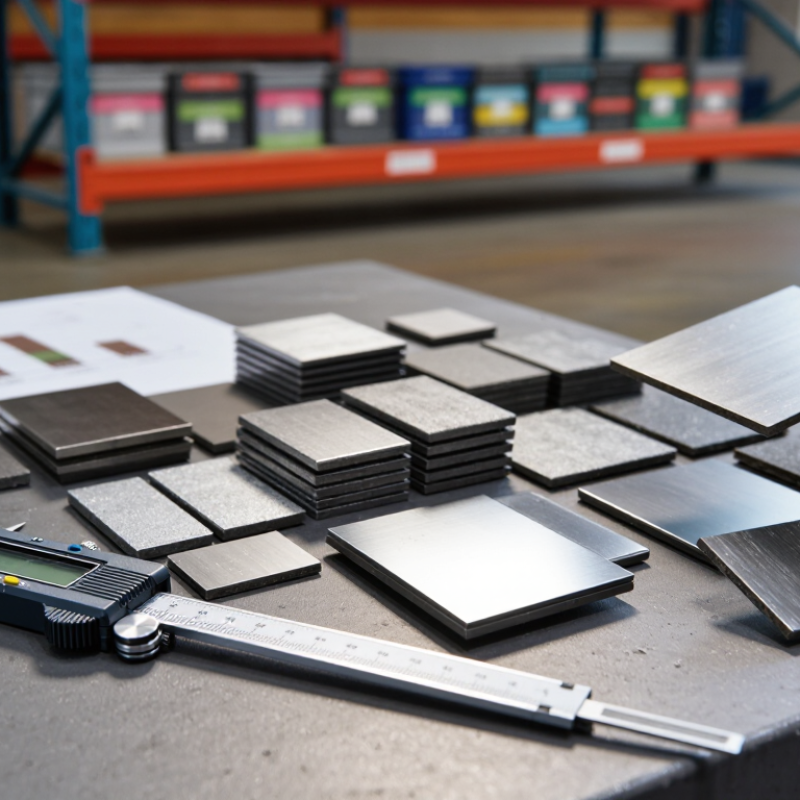
Start with the area each tile must cover and the shape of the surface. Larger tiles mean fewer joints, but they can be harder to position around corners or uneven edges. Smaller pieces offer more flexibility and may simplify replacement. Measure the installation area carefully, then compare the tile dimensions with the layout and available cutting methods. Small details matter.
Thickness affects weight, clearance, and resistance to wear. A thicker tile may suit demanding contact areas, yet it can add load and require adjustments to the supporting structure. Check the substrate, fixing method, and manufacturer’s technical data before deciding. Surface finish also changes performance. A polished face is easier to wipe clean, while a rougher or ground finish may provide more grip or suit a wear-focused application. The right choice depends on the material moving across it and the conditions around the installation. Test a sample.
Tips: Ask for measured dimensions, thickness tolerances, and finish specifications. Compare samples under the project’s actual lighting and contact conditions. I would not choose by appearance alone; a finish that looks ideal in a showroom may behave differently on site.
Match Tile Specifications to Installation and Operating Conditions
How to Choose Tungsten Tiles for Your Project in 2026?
Match Tile Specifications to Installation and Operating Conditions
Choosing tungsten carbide tiles starts with the material striking the surface, not a hardness number alone. For a mineral chute, note particle size, drop height, sliding distance, and whether impact happens at one point. Abrasion and repeated blows place different demands on a tile. A very hard grade may resist wear but chip under severe impact. Balance hardness with toughness for the actual duty.
Installation details matter just as much. Measure the backing plate and check whether tiles will be bonded, bolted, or fitted into a recess. Uneven surfaces can leave gaps where impact concentrates. Confirm tile thickness, edge shape, and allowable tolerances with the installer before ordering. Small details matter. I have seen specifications focus on wear life while overlooking access for replacement; that can make maintenance awkward.
Operating conditions can change the choice. Record temperature cycles, moisture, chemical exposure, and cleaning methods, then verify that the tile grade and attachment system suit them. For hot equipment, check both tile limits and the bonding material’s temperature rating. If loads are uncertain, test a small lined section and inspect it after a representative operating period. A trial is not perfect, and short tests may miss seasonal changes, but field evidence can reveal chipping or loose edges before a full installation.
How to Choose Tungsten Tiles for Your Project in 2026? – Match Tile Specifications to Installation and Operating Conditions
| Project condition | Specification to compare | Typical selection guidance | Installation and operating considerations |
|---|---|---|---|
| General abrasive wear | Carbide grade, binder content, and grain size | Cemented tungsten carbide tiles commonly use about 6–15 wt% cobalt binder. Fine-grain grades often emphasize hardness and abrasion resistance; coarser grains or higher binder content can improve toughness. | Ask for measured hardness and a grade data sheet. Hardness alone does not predict performance under impact, corrosion, or thermal cycling. |
| Fine, dry particles with limited impact | Hardness and tile thickness | A harder, fine-grain grade and a thickness of roughly 3–10 mm may suit compact wear surfaces, subject to the support plate and expected service life. | Provide a rigid, flat backing. Thin tiles are more vulnerable to cracking if the substrate flexes or the installation leaves unsupported gaps. |
| Coarse feed, heavy loading, or repeated impact | Toughness, tile size, edge design, and backing support | Consider a tougher grade and thicker tiles, often around 8–20 mm for heavy-duty layouts. The correct dimensions depend on impact energy, particle size, and available support. | Use a layout that limits exposed edges and stress concentrations. Confirm impact performance with application-specific testing rather than selecting by hardness alone. |
| Corrosive slurry or frequent chemical cleaning | Binder chemistry and corrosion compatibility | Cobalt-bonded grades are common, but the binder can be vulnerable to some corrosive media. Nickel-bonded grades may be considered where corrosion resistance is important. | Check compatibility against the actual chemical, concentration, temperature, and exposure time. A different binder does not guarantee resistance to every chemical environment. |
| Elevated operating temperature | Temperature rating of the tile, binder, joint, and backing | Do not apply a single temperature limit to all carbide tiles. Oxidation, binder type, atmosphere, exposure duration, and temperature cycling all affect service capability. | Request temperature data for the specified grade and installation system. Adhesives, brazes, and backing materials may impose lower limits than the carbide itself. |
| Thermal cycling or rapid temperature changes | Thermal shock resistance and joint design | Choose a grade and tile geometry suited to the expected temperature change and heating or cooling rate. Smaller tiles can help accommodate differential movement in some layouts. | Allow for expansion differences between carbide and the substrate. Avoid abrupt transitions and confirm that the joining method can tolerate the operating cycle. |
| Curved, narrow, or irregular surfaces | Tile plan dimensions, thickness, and edge finish | Small-format tiles, commonly in the range of about 10–50 mm per side, can make it easier to cover curves and complex shapes. Custom dimensions may be needed. | Check the minimum bend radius, joint width, and clearance before ordering. Do not force rigid tiles to conform to a curved backing. |
| Adhesive installation | Bonding surface, adhesive, joint gap, and service temperature | Use a bonding system rated for the operating temperature, chemicals, vibration, and loads. Tile backs and substrate preparation should match the adhesive supplier’s requirements. | Control adhesive thickness and cure conditions. Verify that the substrate is clean, dry, and structurally sound; follow the adhesive manufacturer’s instructions. |
| Brazed or mechanically retained installation | Joint method, backing material, and thermal compatibility | Brazing may suit some metal-backed assemblies, while mechanical retention may be appropriate where repair or replacement is required. Each method needs a compatible design. | Check joint strength, heat input, differential expansion, and access for maintenance. Installation should be performed by qualified personnel using a procedure suited to the materials. |
| Quality control and procurement | Dimensions, tolerances, hardness, density, and traceability | Specify tile length, width, thickness, tolerances, grade, binder type, and any required test method. Cemented tungsten carbide density commonly falls around 14–15.5 g/cm³, depending on composition. | Request inspection records and confirm acceptance criteria before production. Density and hardness ranges vary by grade and should be checked against the agreed specification. |
Note: “Tungsten tiles” for wear protection usually refers to cemented tungsten carbide tiles, not tiles made from pure tungsten. The ranges above are general screening guidance, not guaranteed design limits. Confirm grade data, installation details, and operating conditions with a qualified materials or wear-engineering specialist before final selection.
Evaluate Supplier Quality, Certifications, and Long-Term Costs
Choosing tungsten tiles in 2026 means checking more than the quoted price. Request a lot-specific certificate of analysis with tungsten carbide grade, binder content, density, hardness, and test methods. Match these values to the tile’s job: a wear liner needs different performance priorities from a precision cutting surface. Check dimensions and edge condition on a sample; small variations can complicate installation.
Supplier reliability matters. The USGS Mineral Commodity Summaries 2025 estimates global tungsten mine production at 81,000 metric tons in 2024, including 67,000 from China. This concentrated supply makes traceability and delivery planning worth checking. Ask for batch records, inspection results, and a quality-system certificate, such as ISO 9001. Confirm the certificate’s scope and validity; certification alone does not prove a specific tile meets your tolerances. That matters.
Tip: Compare total installed cost, not unit price. Include machining, freight, downtime, inspection, and expected replacement intervals. Request evidence behind any service-life estimate, ideally from a similar load and operating environment. Cheap can become expensive. I would still treat forecasts cautiously: abrasion, impact, and mounting conditions can shift actual life, and supplier estimates may not reflect your site.
