How to Choose the Right Ball Bearing for Your Project?
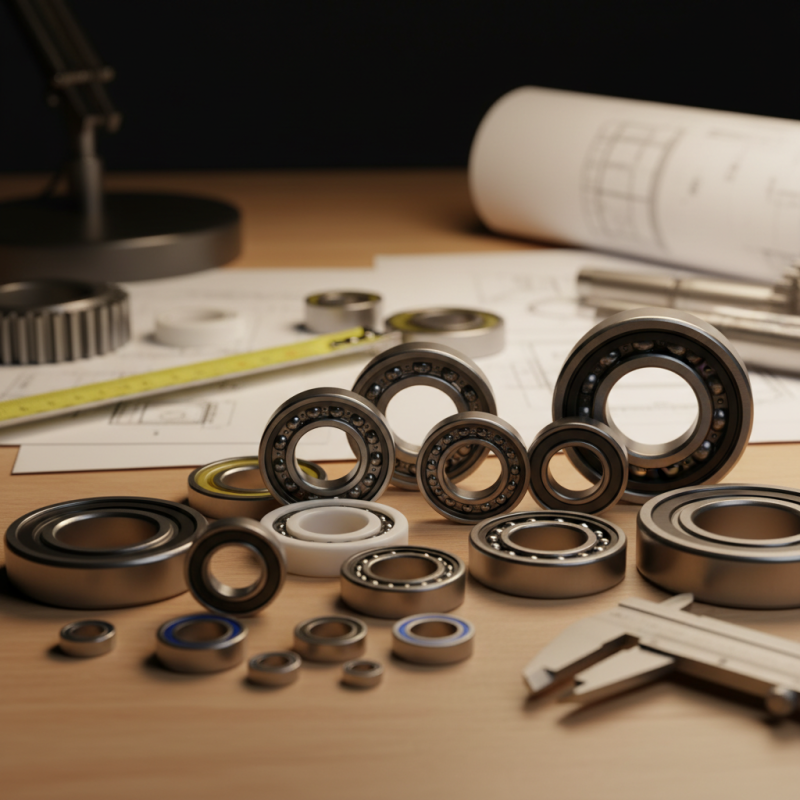
Choosing the right Ball Bearing is crucial for any mechanical project. It can significantly affect performance and longevity. Ball bearings minimize friction and help components move smoothly. However, selecting the wrong type could lead to failure.
Consider the application of the ball bearing. Will it support heavy loads or high speeds? Different materials like steel or ceramic offer unique benefits. The size of the bearing also matters. A small bearing may not withstand high stress, while an oversized one may not fit in tight spaces.
Choosing the right ball bearing is not always straightforward. Mistakes can happen, and sometimes we overlook essential factors. It's essential to reflect on specific needs and gather all required information. Take time to assess your project's demands before making a choice.
Understanding Different Types of Ball Bearings and Their Applications
Ball bearings come in various types, each suited for specific applications. For instance, deep groove ball bearings are among the most widely used. They can handle both radial and axial loads effectively. According to a report by the International Bearing Industry Association, this type accounts for about 40% of the global ball bearing market. They are commonly used in electric motors and household appliances.
Another popular type is angular contact ball bearings. These bearings can support higher axial loads and are critical in automotive applications. Features like contact angles allow them to operate at high speeds. A study revealed that the market for angular contact bearings is growing at a steady rate of 5% annually, driven by demand in sectors like aerospace and manufacturing. However, they require careful alignment during installation, making them a bit challenging for inexperienced users.
Self-aligning ball bearings address some of these alignment issues. They are designed to handle misalignment, which reduces wear. This feature is crucial in applications where equipment may experience vibrations or become misaligned over time. Despite their advantages, these bearings can be more expensive and may not be necessary for all projects. Choosing the right type involves understanding your specific needs, which requires introspection and careful consideration of your project’s demands.
How to Choose the Right Ball Bearing for Your Project?
| Type of Ball Bearing | Best For | Load Capacity | Speed Rating | Applications |
| Deep Groove Ball Bearing | General Applications | Moderate Load | High Speed | Motors, Fans, Robotics |
| Angular Contact Ball Bearing | High Precision | High Load | High Speed | Machine Tools, Spindles |
| Self-Aligning Ball Bearing | Misalignment Compensation | Moderate Load | Moderate Speed | Agricultural Machinery, Conveyors |
| Thrust Ball Bearing | Axial Loads | Low Load | Low Speed | Automotive, Gearboxes |
| Ceramic Ball Bearings | Corrosion Resistance | Low to Moderate Load | High Speed | Medical Devices, High-Tech Equipment |
Key Factors to Consider When Selecting Ball Bearings for Your Project
Selecting the right ball bearing for a project involves several key factors. Start with load capacity. Choose a bearing that can handle the maximum load your application requires. Not all bearings are created equal, and the wrong choice might lead to failure. Temperature range is another critical factor. Some bearings perform poorly in extreme heat or cold. Always check the specifications.
Consider the lubrication type as well. Different applications need different lubrication. Grease may be fine for some, while oil is better for others. It’s easy to overlook this detail, but it can greatly affect performance. Additionally, think about the environment where the bearing will be used. Dust, moisture, and chemicals can degrade performance. Selecting a bearing with appropriate sealing can help extend its life.
The fit is important too. Ensure the bearing fits well within the housing or shaft. A loose fit can lead to vibrations and wear. Sometimes, a tight fit can cause issues as well. It’s essential to reflect on how your application will operate. Balancing these factors can be tricky. Testing the selected bearing in real conditions is often necessary for optimal performance.
Impact of Load Ratings and Dynamic Factors on Bearing Selection
Choosing the right ball bearing involves understanding load ratings and dynamic factors. Load ratings provide crucial insights into how much weight a bearing can handle. For instance, static load ratings often indicate the maximum load a stationary bearing can support. Conversely, dynamic load ratings reveal the weight a bearing can manage while in motion.
Proper load assessment is vital. If you exceed the load rating, premature failure may occur. Studies suggest that nearly 20% of bearing failures result from improper load calculations. It's essential to consider the application's specific conditions, such as varying loads and speeds. Dynamic factors can further complicate these evaluations. For example, an increase in speed can lead to additional stresses on the bearing, sometimes doubling the effective load experienced.
Evaluating these factors isn't straightforward. The interplay of various conditions requires careful consideration. Many engineers encounter challenges when predicting performance under real-world conditions. Bearings in high-vibration environments may need extra attention. A lack of understanding can lead to costly downtime and increased operational risks. Not every scenario can be anticipated, making adaptability a key component in selection.
Analyzing Material Composition for Optimal Bearing Performance
When selecting the right ball bearing, material composition plays a crucial role. The most common materials include stainless steel, chrome steel, and ceramic. Each has distinct properties that affect performance. Stainless steel is corrosion-resistant and offers durability. However, it can be heavier and may not withstand extreme conditions. Conversely, chrome steel is renowned for its hardness but can rust if not properly maintained.
Ceramic bearings are gaining popularity. Their lightweight nature reduces friction. They are also less sensitive to temperature changes. According to a report by the National Institute of Standards and Technology, ceramic bearings can improve efficiency by 20% compared to traditional options. However, they can be more brittle and require careful handling.
Understanding the specific requirements of your project is vital. A project needing high-speed performance may prioritize different materials than one requiring resistance to harsh environments. Decisions should reflect both application needs and material trade-offs. Finding the optimal balance is complex and requires nuanced consideration.
The Role of Lubrication in Enhancing Ball Bearing Lifespan and Efficiency
Lubrication plays a crucial role in the efficiency and lifespan of ball bearings. When bearings are properly lubricated, they run smoother. This reduces friction, which leads to less wear and tear. It can be surprising how much a good lubricant can enhance performance. Choosing the wrong type can lead to failures.
The right lubricant creates a protective film over the bearing surfaces. This film reduces direct contact between metal parts. Without adequate lubrication, bearings can heat up quickly. Overheating can degrade materials and shorten their lifespan. In some cases, it may even cause catastrophic failure. Regular maintenance checks are essential, but many overlook lubrication schedules.
While it's easy to assume all lubricants are the same, they vary widely. Grease, for example, may suit one application while oil is better for another. Understanding the environment and operating conditions is vital. A common mistake is using too little or too much lubricant. Both can be detrimental. Observing lubrication effectiveness can sometimes be a trial-and-error process.