7 Tips to Choose a Fiber Opening and Pillow Filling Machine
A Fiber Opening And Pillow Filling Machine can shape daily production, product consistency, and the workload around each filling station. Choosing one is not just a matter of comparing output figures. Fiber type, pillow size, available floor space, and operator experience all affect how a machine performs in practice. A weak match may cause uneven filling or frequent adjustments. Small details matter.
The seven tips in this guide focus on practical checks buyers can make before choosing equipment. Begin with the materials you process, including their texture and typical condition. Consider the output you need, but compare it with the machine’s stated capacity and your actual production routine. Then assess feeding, opening, filling, and cleaning access. Ask about controls, operator training, spare parts, and service support. A clear answer is useful. So is a realistic demonstration with your own material, when available.
Also review the machine’s dimensions and the space needed for safe loading and maintenance. No single specification tells the whole story; I would still verify performance under working conditions rather than rely on a brochure alone. This guide explains what to inspect, what questions to ask, and where claims may need clarification. The goal is a well-informed choice that suits your product and workflow—not simply the machine with the largest number on its specification sheet.
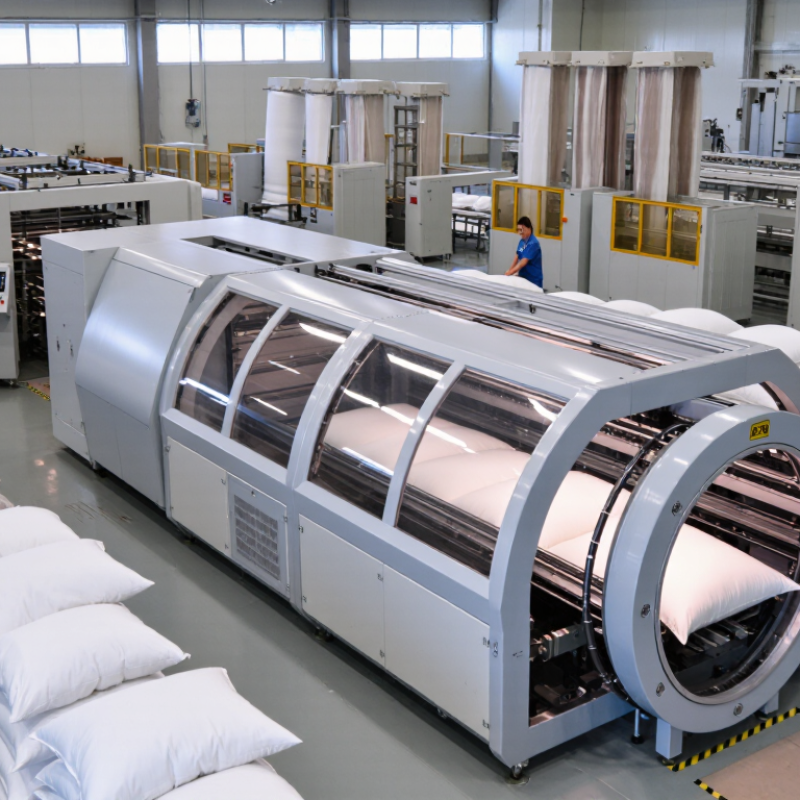
Understand the Functions of Fiber Opening and Pillow Filling Machines
A fiber opening machine prepares compressed filling before it reaches a pillow. Its rollers or beaters separate compacted fibers into a looser, more even layer. This matters because dense clumps can create hard spots inside a finished pillow. The machine also helps operators feed material at a steadier rate. It does not make every fiber type behave the same way. Polyester fiber, for example, may need different settings from natural down or reclaimed filling.
The pillow filling machine moves opened material into a pillow shell, often through an air-assisted nozzle. An operator can adjust the feed rate and filling time to control the amount placed in each case. Watch the shell as it fills. A nozzle held too close to one area may leave the corners thin, while excessive pressure can stretch seams. Small test runs help reveal these issues before a full production batch begins. Simple, but important.
Together, the machines support a repeatable workflow: open the fiber, transfer it, and fill the shell. They do not replace inspection. Check pillow weight, shape, and seam condition at regular intervals, especially after changing materials or settings. A softer, fuller pillow is not always better; customer needs and product specifications matter. And fiber dust can build up around moving parts, so routine cleaning and suitable ventilation deserve attention. Results vary. Even a well-adjusted setup may need another small correction.
Identify the Fiber Types and Production Capacity You Need
Before selecting a fiber opening and pillow filling machine, identify the materials you plan to process. Polyester, recycled polyester, cotton, wool, and blended fibers can behave differently during opening. Fiber length, crimp, surface finish, and moisture affect how smoothly fibers separate and feed. Small differences matter. Check a representative sample for clumping, uneven texture, and excess dust; a quick handful test alone may not reveal how material behaves continuously. Ask for processing specifications that match your actual fiber, not just a general machine category.
Estimate capacity from your required finished pillows per hour and the filling weight of each pillow. Then account for loading, cleaning, and brief stoppages, which reduce real output. A machine rated for a high hourly volume may still struggle if the opening stage feeds fibers inconsistently. That number can mislead. Compare the opener’s output with the filling station’s pace, and consider whether workers can keep the hopper supplied during a full shift. A small trial batch can expose problems such as lumpy filling or frequent manual adjustments. Even careful estimates can miss changes between fiber batches, so leave room for variation rather than planning around a perfect production day.
Compare Opening Quality and Filling Accuracy
7 Tips to Choose a Fiber Opening and Pillow Filling Machine
Compare Opening Quality and Filling Accuracy
Compare opening quality and filling accuracy under identical settings, fiber blends, and production speeds. Check whether fibers separate evenly or leave dense knots and visible clumps. Look closely at the output: excessive dust or shortened fibers may signal harsh processing. A soft-looking sample is not enough. Test more than one batch.
Textile Exchange’s Materials Market Report 2024 estimates that global fiber production reached 124 million tonnes in 2023 and could rise to 160 million tonnes by 2030. This industry-scale growth makes consistent processing increasingly important, but the report does not set machine performance limits. Ask suppliers for test results using your own fiber, then record opening uniformity and filling weight across repeated cycles. Use a calibrated scale, not a visual guess.
For filling accuracy, weigh several pillows from the start, middle, and end of a run. Compare the results with your required weight range and inspect how evenly fiber reaches the corners. A machine can hit the target weight yet leave thin spots. Small differences matter. I would not trust one perfect trial; repeat the test after changing speed or fiber type. Keep the measurements, even when they expose flaws.
Evaluate Machine Controls, Safety, and Maintenance Requirements
Controls should let operators adjust feed rate, opener speed, and filling volume without guesswork. Look for clearly labeled settings, readable displays, and alarms that identify problems rather than merely flashing a code. A touchscreen can look modern yet slow workers down if gloves make it difficult to use. Test common adjustments during a realistic production run. Keep it simple.
Safety features deserve a hands-on check. Confirm that guards cover moving rollers and belts, emergency stops are easy to reach, and access panels cannot be opened casually while the machine runs. Ask how the system handles dust buildup and whether extraction connections fit your facility. Fiber dust can collect around equipment, so cleaning access matters. A manual alone cannot prove that a machine is safe; observe its operation and review staff training needs.
Maintenance affects both uptime and filling consistency. Check whether operators can reach filters, bearings, and cleaning points without awkwardly leaning over moving parts. Request a maintenance schedule with lubrication intervals, inspection tasks, and expected wear-part replacements. Then compare those needs with your available staff and spare-parts storage. It is easy to focus on purchase price and overlook cleaning time. That trade-off may become noticeable after a busy shift. Keep maintenance records, and revise the routine when repeated faults reveal a weak spot.
Review Supplier Support, Warranty, and Total Operating Costs
A fiber opening and pillow filling machine is only as dependable as the support behind it. Before choosing a supplier, ask who handles setup, operator training, and fault diagnosis. Get response times in writing, including what happens when a technician cannot visit promptly. Ask plainly. A clear service contact can matter when a clogged feed path stops production mid-shift.
Read the warranty line by line. Check which parts are covered, how long coverage lasts, and whether labor or shipping is excluded. Ask how wear items such as belts, bearings, and blades are treated. Request a sample maintenance schedule and the price of commonly replaced components. Small print can change the real value. It is easy to focus on the purchase price and overlook a costly service call.
Estimate total operating costs over several years, not just the machine’s invoice. Include electricity, routine cleaning, spare parts, downtime, and the labor needed to keep fiber moving evenly. Ask for throughput figures using material similar to yours, then verify them with a trial if possible. A showroom test may not reflect mixed fiber or frequent pillow-size changes. Keep a simple log of output, stoppages, and repair hours during evaluation; the numbers may be imperfect, but they expose assumptions worth questioning.
7 Tips to Choose a Fiber Opening and Pillow Filling Machine
Review supplier support, warranty, and total operating costs. The chart shows an illustrative five-year cost model for one machine; it is not a supplier quote or an industry benchmark.
Compare energy, labor, maintenance, and spare-parts costs alongside the purchase price. Ask suppliers to specify warranty coverage, response times, and service availability, as these can affect repair costs and downtime.