How to Choose the Right Shale Shaker Screen for Your Needs?
Selecting the right shale shaker screen is crucial for efficient drilling operations. Experts advise that choosing the correct screen can dramatically impact the performance of your shale shaker. According to Mark Johnson, a prominent figure in the oil and gas industry, “A well-chosen shale shaker screen can enhance fluid recovery and reduce downtime.”
shale shaker screens vary in size, mesh type, and material. This diversity makes it challenging for operators to select the best option. Often, businesses overlook the screen's role in the entire drilling process. A wrong choice can lead to ineffective mud separation and increased waste. If you focus only on cost, you might miss out on vital performance benefits.
Understanding your specific needs is essential. Evaluate the drilling conditions and fluid types involved. Every project is unique, and a cookie-cutter approach does not work. Reflecting on these factors will lead to better decisions. The right shale shaker screen is not just a purchase; it’s an investment in operational success.
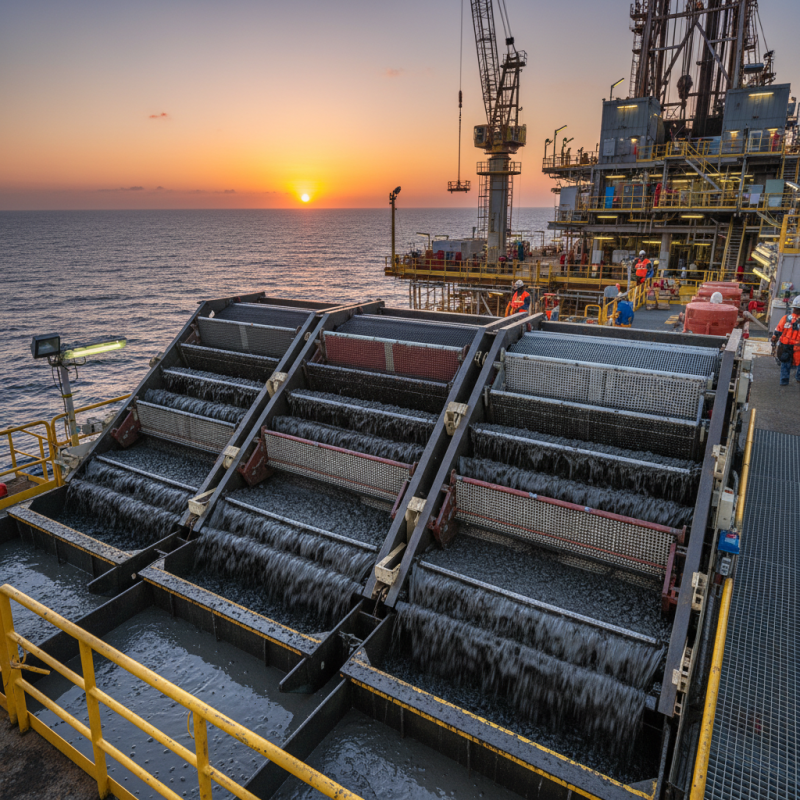
Understanding Shale Shaker Screens: Types and Specifications
When choosing a shale shaker screen, understanding the different types and specifications is crucial. There are various designs available, each serving distinct purposes. Woven wire mesh is common. It provides excellent filtration and durability. On the other hand, perforated plate screens allow larger particles to pass through. This choice may be beneficial for certain drilling conditions.
The specifications can be overwhelming. Mesh sizes and screen APIs are vital metrics. API numbers indicate the screen's size and its capacity to filter material. A finer mesh captures smaller particles. However, this may slow down the flow rate. Choosing a mesh that aligns with your operation’s needs can be tricky.
Pay attention to the frame material as well. Durable materials can withstand harsh conditions but may affect weight and mobility. Sometimes, operators compromise on quality for cost. This can lead to inefficient drilling and frequent replacements. It’s essential to reflect on your specific requirements before making a choice. Prioritizing quality may save money in the long run.
Evaluating the Key Factors: Mesh Size and API Designation
Choosing the right shale shaker screen involves understanding mesh size and API designation. Mesh size refers to the number of openings per linear inch. A higher mesh size offers finer filtration. For instance, a 40-mesh screen can retain larger particles while allowing smaller ones to pass. This balance is crucial in drilling operations.
API designation is equally important. It classifies screen sizes based on their aperture openings. The API standard is a vital indicator of performance. According to a report by the Society of Petroleum Engineers, using the correct API screen can improve efficiency by up to 30%. Yet, this standard is not foolproof. Operators often face unique challenges and conditions.
Finer screens can be easily compromised. They may clog faster and require frequent replacement. A study by the American Petroleum Institute highlights that overly fine screens can lead to inefficiencies. Regular assessments of mesh size versus well conditions are essential. An understanding of these factors lays the foundation for effective drilling.
How to Choose the Right Shale Shaker Screen for Your Needs? - Evaluating the Key Factors: Mesh Size and API Designation
| Mesh Size (Microns) | API Designation | Typical Applications | Recommended Use |
| 140 | API 20 | Light drilling fluids | High filtration efficiency |
| 200 | API 25 | Medium drilling operations | Balanced performance |
| 250 | API 30 | Heavy drilling fluids | Ideal for high solid content |
| 325 | API 40 | Fine cuttings removal | Excellent for mud control |
| 400 | API 50 | Extensive fluid processing | Efficiency in separation |
Assessing Material Durability: Steel vs. Composite Screens
When choosing a shale shaker screen, material durability is key. Two primary types are steel and composite screens. Steel screens offer high tensile strength. They resist wear and tear effectively. However, they can be heavy and may corrode over time. This corrosion can affect your operations. It's essential to consider the environment where they will be used.
Composite screens are lightweight and resistant to harsh chemicals. They often provide better recovery rates. Their construction allows for flexibility, which can reduce damage during operation. Yet, they may not hold up as well in extreme situations. This means there can be trade-offs depending on usage.
Both materials pose unique challenges. Steel may require more maintenance, while composite materials might have limited lifespan. Understanding these nuances helps in making an informed choice. Testing different options is wise before settling on a final product. Each site may present different demands. A screen that works well in one scenario may fail in another. Hence, constant evaluation and adjustment are necessary for optimal performance.
Calculating Optimal Flow Rate for Shale Shaker Efficiency
Choosing the right shale shaker screen is crucial for efficiency. One key factor is the flow rate. Optimal flow rates can vary greatly depending on the type of drilling fluid used and the specific application. For instance, reports indicate that maintaining a flow rate between 500 to 1,200 gallons per minute can significantly enhance the performance of shale shakers in the field.
Understanding your drilling environment helps inform your decisions. If the flow rate is too high, it can lead to poor separation. Conversely, a low flow rate may result in inefficient solids control. Data shows that an improperly calculated flow rate can decrease shaker efficiency by as much as 30%. It raises questions about operational costs and the effectiveness of waste management strategies.
It's not just about numbers; it's about understanding the specifics of your project. Each drilling operation is unique. Factors like particle size and fluid viscosity are often overlooked. Ignoring these can compromise the shale shaker's performance. A meticulous approach to calculating flow rates will lead to better resource management, ultimately influencing the project's success.
Cost vs. Performance: Making an Informed Choice for Your Needs
Choosing the right shale shaker screen is crucial. It affects both cost and performance. According to recent industry reports, an effective screen can improve drilling efficiency by up to 30%. This means significant savings in operation costs. However, not all screens offer the same performance.
Cost plays a critical role. High-performance screens often come at a premium. Surprisingly, there is a trade-off. Sometimes, lower-cost screens perform adequately in certain conditions. Understanding the specific needs of your project can help. For instance, if the drilling mud is less complex, a budget screen might suffice.
It’s important to weigh these factors carefully. In some cases, a more expensive option might deliver better lifetime value. However, a rush to choose solely based on price can lead to poor performance. Data shows that about 15% of projects fail to meet expected results due to inappropriate screen selection. It’s essential to reflect on both current and future needs. Balancing initial investment with long-term benefits is key.