

China Best Hydraulic Internal Gear Pump Manufacturer
Choosing a China Best Hydraulic Internal Gear Pump Manufacturer requires more than comparing prices or catalog dimensions. A Hydraulic Internal Gear Pump may look compact on a drawing, yet its performance depends on clearances, materials, machining quality, and consistent assembly. In a working system, oil temperature rises, viscosity shifts, and small contamination can affect service life. Details matter.
Hydraulic engineer Daniel Mercer sums up the selection principle: “A pump is only dependable when its design, fluid, and operating conditions agree.” Buyers should check rated pressure, displacement, speed range, noise data, and permitted fluid viscosity. Ask for test records, material specifications, and guidance on installation and filtration. A clear answer is useful. A vague promise is not.
This outline examines how manufacturers design and produce internal gear pumps, what quality checks support dependable operation, and how buyers can compare technical support. It also considers application fit, customization, delivery, and after-sales service. Look for measurable evidence, such as documented pressure tests and traceable production checks, rather than broad claims about performance. One limitation deserves attention: published specifications cannot predict every installation’s results. Confirm the operating profile with the supplier, especially for high-duty cycles or changing temperatures. The best choice is not always the lowest-cost unit. It is the pump whose verified characteristics match the system, with room for honest questions and careful review.
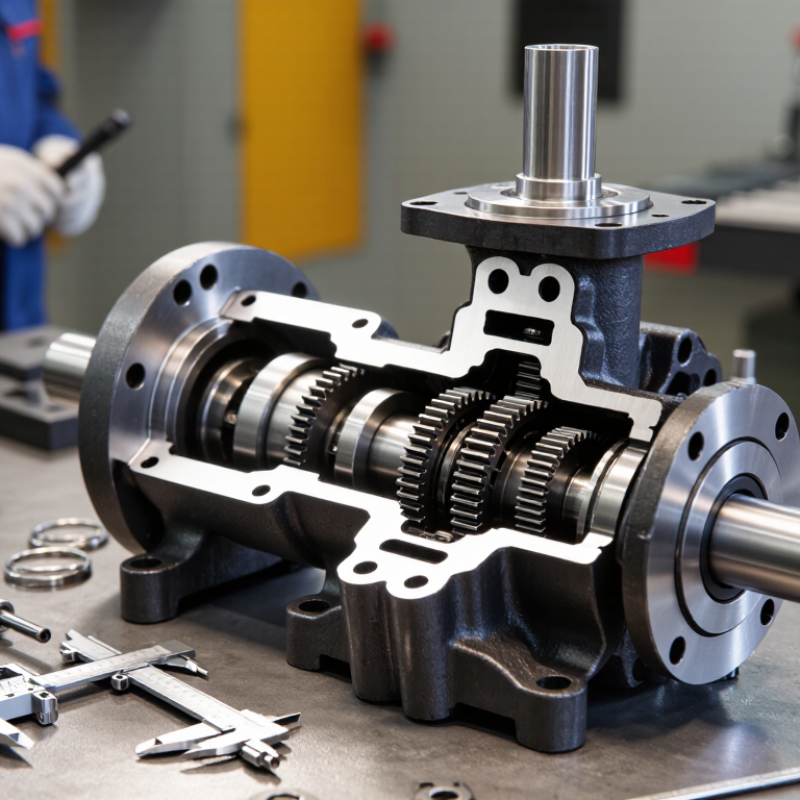
Hydraulic Internal Gear Pumps: Definition and Core Operating Principle
An internal gear pump moves hydraulic fluid through the changing spaces between two meshing rotors. A smaller, externally toothed rotor sits inside a larger rotor with internal teeth. The two rotate together, but their centers are offset. That small offset creates the pumping action.
Here’s the basic cycle. As the teeth separate near the inlet, the available chamber volume grows and draws fluid into the pump. The fluid travels around the casing, trapped between the teeth and housing. Near the outlet, the teeth mesh again. Chamber volume shrinks, pushing fluid into the pressure line. In many designs, a crescent-shaped divider separates the inlet and outlet zones; other configurations use different sealing arrangements. Details vary.
The motion is steady. Not magic. Close clearances help limit internal leakage, so wear and fluid cleanliness matter. In workshops, a dry start or a restricted inlet can quickly cause noise, heat, or poor flow. These symptoms deserve attention, though noise alone does not identify the fault. Internal gear pumps are valued for smooth delivery and compact construction, but their performance depends on speed, viscosity, pressure, and installation. A small inlet restriction can matter more than expected. Check the operating data, not just the pump’s size.
Main Components and Materials Used in Internal Gear Pump Design
China Best Hydraulic Internal Gear Pump Manufacturer
An internal gear pump depends on close fits, stable materials, and controlled lubrication. Its inner and outer rotors are commonly made from alloy steel, then heat-treated to resist tooth wear. The crescent-shaped separator may use hardened steel or a wear-resistant insert. The housing is often cast iron or aluminum, while bronze bushings support the rotating parts. Seal material, such as nitrile rubber or fluorocarbon elastomer, should match fluid type and operating temperature.
Material choice affects more than service life. A harder rotor can resist scoring, but may accelerate wear on its mating surface if alignment or lubrication is poor. ISO 4406:2021 classifies hydraulic-fluid cleanliness by particle counts at ≥4, ≥6, and ≥14 μm(c). This gives maintenance teams a practical reference for controlling contaminants that can damage tight gear clearances. The pump’s actual tolerance still depends on its design and test conditions.
Tips: Check fluid compatibility before selecting seals. Inspect the inlet screen and oil for metallic particles during maintenance. A small detail, but important. Do not assume a stronger alloy solves every wear problem; surface finish and clean assembly matter too.
China Best Hydraulic Internal Gear Pump Manufacturer - Main Components and Materials Used in Internal Gear Pump Design
| Component | Primary Function | Common Material Options | Material Selection Considerations |
|---|---|---|---|
| Pump housing | Contains the pumping elements and provides pressure and mounting support. | Gray cast iron, ductile iron, or aluminum alloy | Cast iron is commonly selected for stiffness and wear resistance; aluminum alloy can reduce weight. Suitability depends on pressure, mounting loads, fluid compatibility, and the pump design. |
| Internal rotor (inner gear) | Transfers torque and forms part of the expanding and contracting pumping chambers. | Case-hardening alloy steel, such as 20MnCr5 or AISI 8620 | A hardened tooth surface helps resist wear and contact fatigue. Core toughness and heat-treatment control are important for repeated loading. |
| External gear (outer rotor) | Meshes with the internal rotor to move fluid through the pump chambers. | Case-hardening alloy steel; some designs use other hardened steels | Material and heat treatment are selected to balance tooth-surface durability, dimensional stability, and compatibility with the inner rotor. |
| Crescent or separator | Separates the inlet and outlet regions in crescent-style internal gear pump designs. | Hardened steel, cast iron, or a wear-resistant surface-treated material | Its surface must tolerate sliding contact and maintain an appropriate running clearance. Some internal gear designs use a different geometry and do not have a separate crescent. |
| Drive shaft | Transmits input torque from the motor or other prime mover to the rotor. | Medium-carbon or alloy steel, such as 42CrMo4 or AISI 4140 | Strength, fatigue resistance, shaft-end loading, corrosion exposure, and the selected connection type influence material and heat-treatment choices. |
| Side plates or thrust plates | Close the sides of the pumping chamber and help control axial leakage and wear. | Steel, bronze, aluminum-bronze, or steel with a wear-resistant facing | Surface finish, flatness, lubrication, fluid cleanliness, and resistance to scuffing are key factors in material selection. |
| Bearings or bushings | Support the shaft and maintain alignment of rotating components. | Bronze alloys, steel-backed bearing materials, or hardened bearing steel | The choice depends on speed, load, lubrication conditions, operating temperature, and whether plain or rolling-element support is used. |
| Shaft seal | Limits fluid leakage where the drive shaft exits the housing. | NBR (nitrile), FKM, or PTFE-based sealing materials | Elastomer compatibility depends on the hydraulic fluid, temperature, shaft speed, and exposure conditions. Seal selection should follow the pump and seal supplier's specifications. |
| Fasteners and port plugs | Secure the assembly and close unused or service ports. | Carbon steel, alloy steel, or corrosion-resistant stainless steel | Strength class, thread type, sealing method, corrosion exposure, and the specified assembly torque should be considered. |
Design note: Material grades listed are common examples, not universal specifications. Final selection should be verified against operating pressure, speed, temperature, hydraulic fluid, duty cycle, and the pump manufacturer's design requirements.
How Chinese Manufacturers Produce and Test Internal Gear Pumps
China Best Hydraulic Internal Gear Pump Manufacturer
How Chinese Manufacturers Produce and Test Internal Gear Pumps
Producing an internal gear pump begins with carefully machined inner and outer rotors. Depending on the design, a crescent-shaped separator helps divide the inlet and outlet chambers. CNC equipment shapes the parts, while controlled heat treatment improves wear resistance. Technicians then deburr edges and inspect tooth profiles, shaft dimensions, and surface finish. Small errors matter. A rough edge or uneven clearance can increase noise and reduce efficiency.
During assembly, clean components are fitted with seals and bearings, then checked for smooth rotation. Each pump is tested with hydraulic oil at specified speeds and pressures. Operators record flow, pressure, leakage, and operating temperature. Some facilities also listen for unusual noise or vibration. Test results are useful, but one test cannot represent every working condition; oil viscosity and temperature can change performance in service. Manufacturing quality depends on repeatable checks, not impressive claims.
Tips: Ask for recorded flow and pressure results, not just a pass label. Check whether the test conditions match your intended application. Small production variations can happen, so clear inspection records are worth reviewing.
China Best Hydraulic Internal Gear Pump Manufacturer — How Chinese Manufacturers Produce and Test Internal Gear Pumps
Example test-bench readings for a fixed-speed internal gear pump, showing how delivery flow changes as outlet pressure increases.
The example readings show flow decreasing from 40 to 34 L/min as pressure rises from 0 to 20 MPa. Actual results depend on pump displacement, rotational speed, fluid viscosity, and test temperature; acceptance limits are model-specific.
Key Criteria for Evaluating a Chinese Internal Gear Pump Manufacturer
Choosing a Chinese internal gear pump manufacturer requires more than comparing quoted prices. Check whether the supplier can match displacement, speed, pressure, fluid viscosity, and operating temperature to your system.
Ask for dimensional drawings, material specifications, and documented performance data for the pump model you intend to buy. A sample test report should identify test conditions, not just show a flow rate. Details matter.
Inspect how the manufacturer controls machining and assembly. Gear clearances, shaft finish, and sealing surfaces can affect leakage, noise, and service life.
Ask how each unit is tested for pressure, flow, and external leakage before shipment. If possible, review a traceable inspection record or arrange a technical review of a sample unit. A brochure is not proof.
Discuss spare-part availability, packaging, delivery times, and warranty terms in writing. Responses to specific questions can reveal how well the supplier understands your application.
Still, no checklist catches every issue; actual performance may differ when fluid temperature or installation conditions change. Share your operating data and ask the engineering team to explain any assumptions behind its selection.
Industrial Applications, Performance Factors, and Maintenance Needs
Internal gear pumps serve machine tools, injection-molding systems, presses, and mobile equipment where steady hydraulic flow is needed. Their compact design can suit installations with limited space. The right pump depends on the duty cycle, required flow, operating pressure, and fluid viscosity. Small details matter. Cold oil at startup may increase inlet resistance, while excessive heat can thin the fluid and reduce lubrication.
Performance also depends on speed, suction conditions, and cleanliness. Restricted inlet lines can cause noise and erratic delivery. Fine particles may accelerate wear on gears and housing surfaces. Check the pump’s rated pressure and speed against the machine’s actual operating range; a short peak can still matter. An oversized pump is not automatically a safer choice. It may waste energy and raise oil temperature.
Maintenance starts with the basics: inspect for leaks, unusual noise, vibration, and temperature changes. Track filter condition and replace hydraulic fluid according to its specification and service interval. Not always. A clean-looking reservoir can still contain harmful contamination. Routine checks help, but they do not replace correct installation or suitable fluid selection. A common mistake is focusing only on pump output while overlooking the inlet hose, fittings, or clogged filters.
