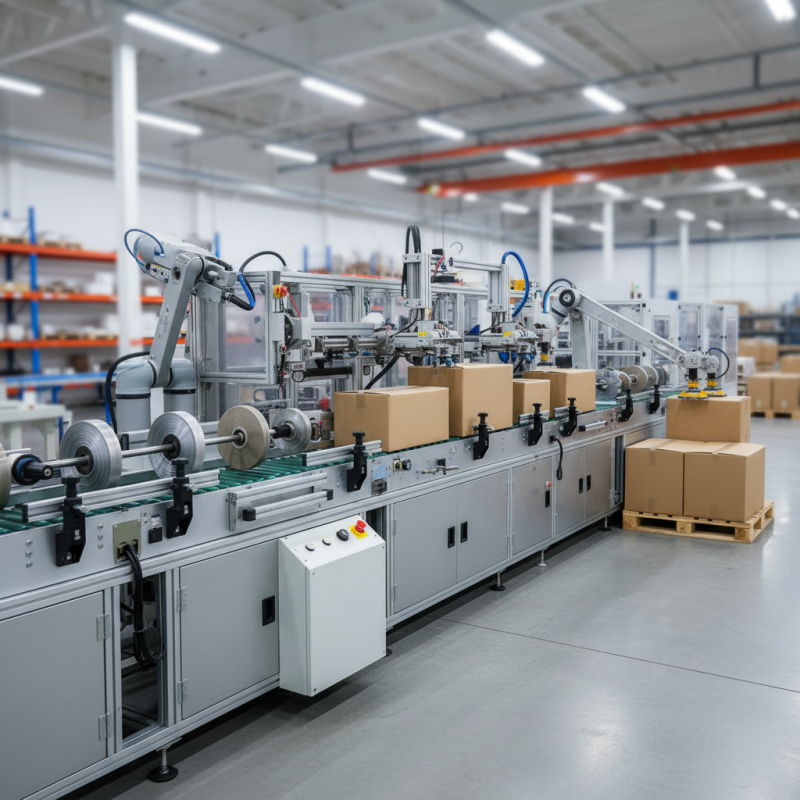
Best Coiling and Packing Machine for Efficient Production?
In the fast-paced world of manufacturing, efficiency is key. A reliable Coiling and Packing Machine can transform production lines. These machines streamline processes, enhancing productivity and reducing downtime. Choosing the right model is crucial for meeting diverse packaging needs.
Consider the varying sizes of products. Some machines accommodate different coil sizes, ensuring flexibility. However, not all machines deliver the same quality. It's essential to evaluate features and compatibility with existing systems. The challenge lies in balancing cost and efficiency.
Investing in a high-quality Coiling and Packing Machine is not just a financial decision; it requires careful thought. It’s vital to reflect on how this choice impacts overall operations. Look for machines that offer durability and ease of maintenance. Understanding specific requirements can lead to better choices in the long run.
Benefits of Using Coiling and Packing Machines in Production Lines
Coiling and packing machines offer significant advantages in production lines. They enhance efficiency by reducing manual labor. With these machines, products can be coiled tightly and packed quickly. This leads to faster movement along the production line. Time saved here means more output in less time.
Using coiling and packing machines also increases consistency. Each product receives the same treatment, resulting in uniform packaging. However, not all products fit perfectly into this system. Some items may not wrap well. Adjustments are required, leading to possible delays. Operators need to be trained properly to handle these machines effectively.
Additionally, these machines contribute to better space management. By coiling products, less room is needed for storage. Products take up less space when packaged efficiently. Nonetheless, there can be challenges to overcome. Machines require regular maintenance to function well. Ignoring this can lead to breakdowns and slowdowns. Proper maintenance schedules need to be established for optimal performance.
Key Features to Look for in an Efficient Coiling and Packing Machine
When choosing a coiling and packing machine, efficiency is key. A reliable machine can significantly enhance productivity. Look for a machine that offers adjustable tension control. This feature helps in managing different types of materials without causing damage.
The size of the machine should also be considered. Compact designs save space, which is essential for smaller facilities. However, ensure that the machine can handle the desired production volume. A machine that is too small may lead to bottlenecks. Efficiency is not just about speed; it’s about quality too. Machines that provide consistent coil density can help maintain quality standards.
It’s important to analyze the user interface. A complicated setup can lead to errors and wasted time. Machines with intuitive controls allow operators to work efficiently. Lastly, consider maintenance needs. Machines that require frequent servicing can disrupt production. Evaluate all these features to make a well-informed decision. Remember, choosing the right machine will require careful thought.
Industry Standards: Performance Metrics for Coiling and Packing Machines
When selecting a coiling and packing machine, focus on industry performance metrics. Machines should meet specific standards to ensure efficient production. Key metrics include speed, accuracy, and reliability. Speed impacts the output rate. A machine that coils and packs faster can significantly boost productivity.
Accuracy is another crucial factor. A machine must correctly position and secure products for optimal packaging. This will prevent waste and errors. Reliability ensures consistent operation. Any downtime can lead to production delays and increased costs. Companies often overlook maintenance needs. Regular servicing is vital to keep machines running smoothly.
Sustainability also plays a role. Machines that utilize minimal materials can reduce waste. It’s essential to evaluate energy consumption as well. Some machines may operate slowly yet use less energy. This could result in better overall efficiency. Developers should consider how their machines perform under real-world conditions, not just in controlled environments. Balancing speed, accuracy, and sustainability can be challenging yet is necessary for long-term success.
Comparative Analysis of Popular Coiling and Packing Machine Brands
In the quest for efficient production, selecting the right coiling and packing machine is crucial. Many businesses face challenges when comparing different machines available. Efficiency is not always about speed; accuracy is vital too. A machine may produce items quickly but lacks precision, leading to waste. This trade-off can impact overall productivity significantly.
Some machines offer advanced features like automatic adjustment for various coil sizes. However, they can be complex to operate. Operators might require extensive training, which can slow down production initially. Alternatively, simpler machines might be easier to handle but lack automation. This could result in higher manual labor costs in the long run.
When comparing options, companies should consider their specific needs. Questions like how often coils change size or types of materials used can guide decisions. It's essential to gather insights from users who have faced similar choices. Feedback from real-world applications can reveal potential pitfalls. Engaging in discussions with operators helps identify the strengths and weaknesses of different machines.
Future Trends in Coiling and Packing Technology for Enhanced Efficiency
Future trends in coiling and packing technology are shaping efficient production. Automation leads the way, reducing manual labor. Smart machines use sensors to ensure better precision. They adapt to various product types swiftly.
The rise of eco-friendly materials is notable. Companies seek sustainable packaging solutions. These innovations help reduce waste. However, integrating new materials can be challenging. It requires a learning curve for staff.
Tips: Monitor machine performance regularly. Look for patterns in efficiency. Train employees on new technologies thoroughly. Embrace small mistakes as learning opportunities. Adjust methods based on feedback to improve processes. Streamlined operations result from continuous improvement.